
E-bike tire pressure: how to set PSI for your tires
Last checked Oct 24, 2026 · By EbikePost editors
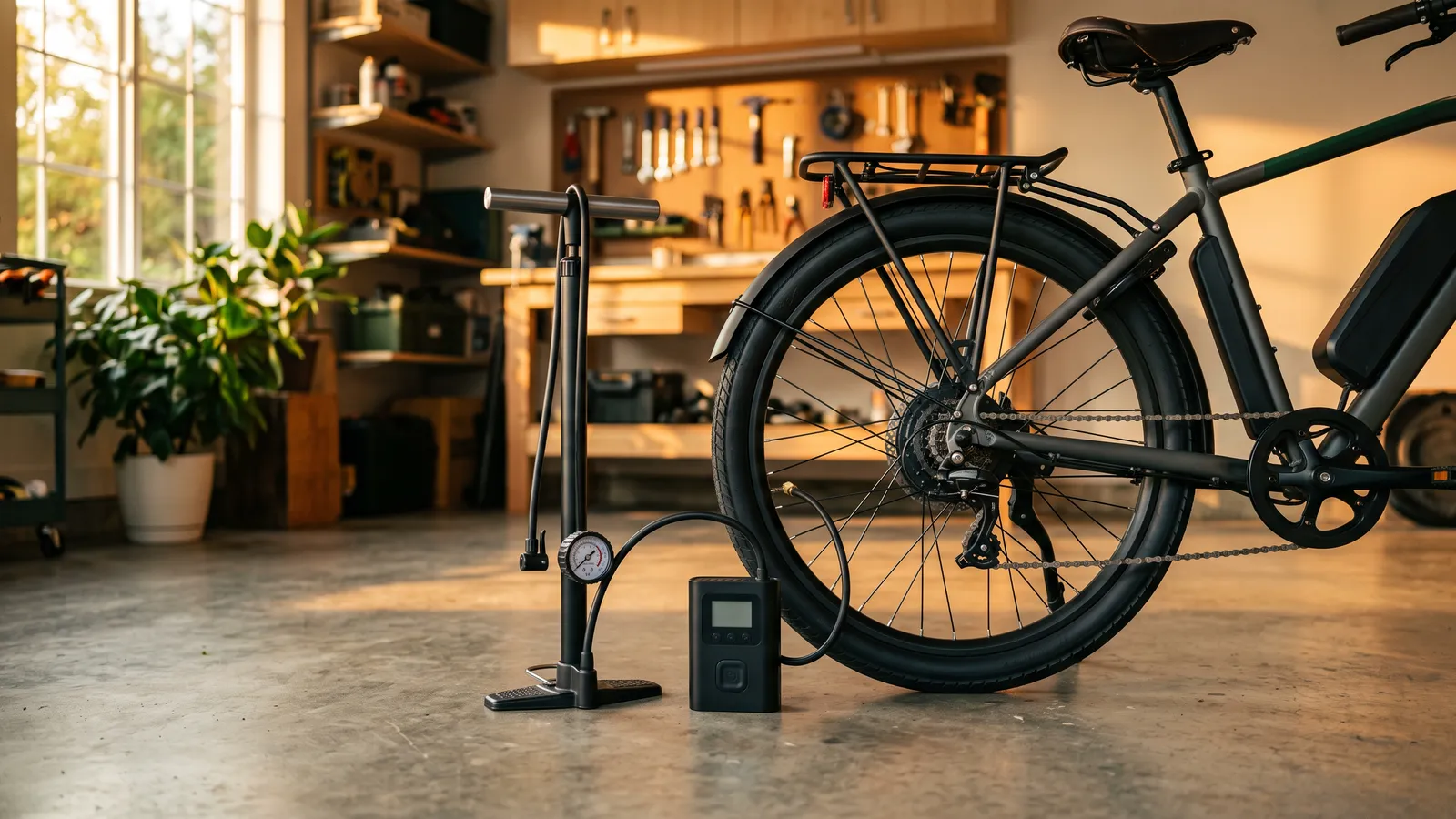
Use the pressure range printed on the sidewall of your tire, never go above the maximum or below the minimum, and check it with a gauge, not your thumb. Within that range, a heavier load calls for more pressure and a lighter load can run lower for comfort and grip. There is no single PSI for all e-bikes: fat tires, commuter tires and cargo tires all have different ranges.
Step 1: find your range
Read the sidewall. Schwalbe says "the permissible pressure range is indicated on the tire sidewall" and that "under no circumstances should you exceed or fall below the minimum and maximum pressure limits specified on the tire." Lectric's manual and Aventon both tell owners to inflate within that printed range. The number is usually shown as PSI and bar, a minimum and a maximum.
If your rim lists a lower maximum than the tire does, the rim's lower figure governs, per Schwalbe's tubeless page. A tire swap can change the range, so read the new tire, not the old advice.
Step 2: use a gauge
Schwalbe says the thumb test "is not very reliable" and that you should use a pressure gauge. It suggests a floor pump with a built-in gauge for frequent riders. See our pump guide. Check before you ride, when you can still add air at home.
Step 3: choose a point inside the range
Schwalbe's guidance on the pressure inside the range:
- Load decides. The right pressure "depends largely on the weight load on the tire," mainly the rider and luggage. The narrower the tire and the greater the total load, the higher the pressure must be.
- Lower is comfier and grippier, Schwalbe says, but permanently low pressure often leads to premature tire wear and cracking sidewalls.
- Adjust in small steps and re-check, staying inside the printed limits.
A simple routine that stays inside the rules:
- Look up the sidewall minimum and maximum.
- For a light rider with little cargo, start near the lower part of the range. For a heavy rider or loaded rack, start nearer the upper part. Do not pass the maximum.
- Ride a short loop. If the bike feels harsh or skittery, let out a little; if the tire squirms or the rim feels close to the ground, add a little.
- Keep the number that worked, and re-check it as your load changes.
Schwalbe's own pressure tool applies to its mountain-bike tires. A calculator is only a starting point for other tires, and the sidewall range still limits you.
When your load changes
Pressure that suits a solo commute may be wrong with panniers full. Schwalbe's rule is that more total load needs more pressure, and cargo counts. Check your bike's weight limit first: Lectric's XP 4 manual lists a 330 lb maximum total weight with a 150 lb rack limit. Then re-set pressure inside the sidewall range for the heavier load. See our guide to choosing the right size and our baskets and racks if you carry cargo.
How often to check
| Source | Frequency |
|---|---|
| Aventon | Before each ride (within the sidewall range), and weekly |
| Lectric | Monthly service list, and on the pre-ride checklist |
| Schwalbe | At least once a month; before every ride with latex tubes |
Schwalbe says a loss of 1 bar per month, about 14.5 PSI, can be considered normal on Schwalbe's page. So a bike that sits for a few weeks can be well under. That matters for e-bikes: Lectric lists tire pressure among the things that change range. See how far an e-bike can go.
Tubed or tubeless
Schwalbe says tubeless tires can generally be ridden at slightly lower pressure, but its page gives no figure and still tells you to stay within the limits printed on the tire. Tubeless setups, sealant and tire changes are shop work or follow your maker's manual exactly; we do not give pressure numbers for them.
What to avoid
- Do not use a pressure from a forum or a chart over your sidewall's range.
- Do not run a tire near its minimum all the time to chase comfort.
- Do not inflate beyond the maximum "because the tire is big." Check the rim limit too.
- Do not ride on cracked sidewalls or tires worn down to the casing. Rad says to replace a tire once the tread wears enough that you can see the casing, and Lectric's quarterly list includes checking tread wear.
See a shop if a tire keeps losing air, has a bulge, a cut, cracked sidewalls or exposed casing, or if a valve is damaged. Flat repairs on e-bikes can involve the motor wheel, wiring and brakes, so follow your maker's manual or use a shop. Do not open or touch the battery, motor or wiring.
Questions
What should my e-bike tire pressure be?
Inside the range printed on your tire's sidewall, higher for heavier loads. Not above the maximum or below the minimum.
Is there an e-bike tire pressure chart?
Charts exist, but they cannot know your tire. Use the sidewall range and the load rule above.
Is there an e-bike tire pressure calculator?
Schwalbe has Pressure Prof for its mountain-bike tires. For others, treat any calculator as a starting point inside the sidewall limits.
What gauge should I use?
A floor pump with a built-in gauge, which Schwalbe suggests for frequent riders, or a separate gauge.
How does tire pressure affect electric bike range?
Lectric lists tire pressure among the factors that change range, along with rider weight, terrain and wind.
Written from tire and e-bike makers' pages. Instructions differ by tire and model: the sidewall decides.
Sources (5)
- Schwalbe: Tire pressure (Technology FAQ: sidewall limits, gauge not thumb, at least monthly, load, comfort versus wear)
- Schwalbe: Tubeless (Technology FAQ: rim maximum, floor pump with gauge)
- Lectric XP 4 User Manual v1.3 2025 (Pre-Ride Safety Checklist and Monthly service: inflate within the range on the tire sidewall; Bike Performance Disclaimer)
- Rad Power Bikes: Preventive Care for Your Electric Bike (replace a tire once the casing shows)
- Aventon: The ultimate ebike maintenance schedule guide (check pressure before rides and weekly, within the sidewall range)
Last checked Oct 24, 2026
Keep reading
 GuideHow far can an e-bike go? Ebike range explainedEbike range explained: how battery Wh, assist level, rider and cargo weight, terrain, speed and cold change range, and how to estimate yours.
 GuideE-bike battery not charging: safe checks to try firstWhy is my ebike battery not charging? Safe checks: power switch, outlet, charger light, plug, temperature and display codes. Then contact the maker.
 GuideWhat size e-bike do I need? Ebike size guide by heightEbike size guide: how to use the maker's rider height range, frame style, standover and saddle height to pick an e-bike that fits before you buy.