
What is a Class 3 e-bike? Classes 1, 2 and 3 explained
Last checked Nov 9, 2026 · By EbikePost editors
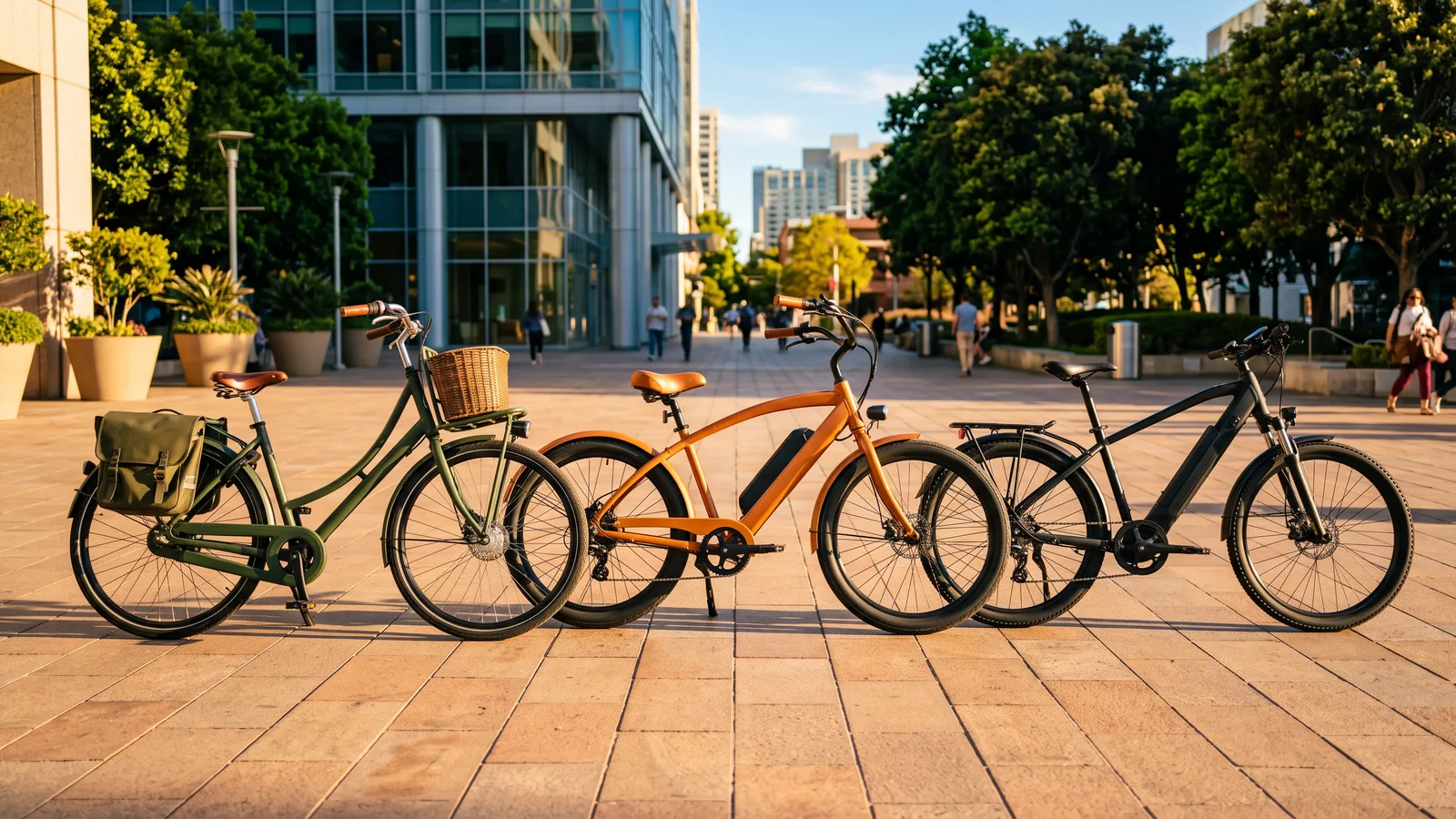
A Class 3 e-bike is one whose motor helps only while you pedal and stops helping at 28 mph. Class 1 works the same way but stops at 20 mph, and Class 2 has a throttle that can move the bike without pedaling, also cut off at 20 mph. That's the three-class system most U.S. states use, and all three classes have a motor under 750 W and working pedals. Where each class can ride, and who can ride a Class 3, is set by your state and sometimes your city, so check before you buy.
The three classes
The three-class system is a model law that many states have adopted in some form. The Municipality of Anchorage's e-bike handout summarizes it this way:
| Class | How the motor works | Assist stops at |
|---|---|---|
| Class 1 | Assists only while you pedal | 20 mph |
| Class 2 | Has a throttle, which can power the bike without pedaling | 20 mph |
| Class 3 | Assists only while you pedal | 28 mph |
All classes have a motor under 750 W (1 horsepower) and fully operable pedals. Some state laws also require a speedometer on Class 3 bikes. A few states differ from the model, so read yours. Some bikes can switch between modes, and makers may label them "Class 1/2/3" or "multi-class". The class on your bike's label is what counts for rules, so don't assume a bike is legal in a mode just because the hardware allows it.
What is a Class 3 e-bike?
A Class 3 e-bike is a pedal-assist bike with a higher cut-off. Kansas's statute is a typical example of the wording: a Class 3 bike has "a motor that provides assistance only when the rider is pedaling and ceases to provide assistance when the bicycle reaches the speed of 28 miles per hour." Like the other classes, the motor has to be under 750 W and the bike needs fully operative pedals.
Two things follow from that definition:
- The 28 mph is an assist limit, not a top speed. You can go faster downhill or on your own legs; the motor just stops helping.
- Under the model wording, the motor only helps while you pedal. Some bikes sold as "Class 3" also have a throttle that works at lower speeds. How your state treats that combination is a question for its statute, so read it on our state law checker.
Class 3 is where states add the most rules. Kansas, for example, says no one under 16 may operate a Class 3 bike (they can ride as a passenger on one built for passengers), and it lets a city, county or state agency restrict a specific class on a path or trail. Other states set different ages and places, so check yours.
What is a Class 1 e-bike?
A Class 1 e-bike assists only while you pedal and stops assisting at 20 mph. There's no throttle doing the work. In Kansas's wording, the motor "provides assistance only when the rider is pedaling and ceases to provide assistance when the bicycle reaches the speed of 20 miles per hour." Class 1 is usually the class with the widest access to paths and trails, because it behaves most like an ordinary bike.
What is a Class 2 e-bike?
A Class 2 e-bike has a motor that can move the bike by itself, usually through a thumb or twist throttle, and stops assisting at 20 mph. Kansas describes it as a motor that "may be used exclusively to propel the bicycle." Most Class 2 bikes also have pedal assist.
Bikes that switch classes
Many current e-bikes can be set to more than one class. Velotric's Discover 3 page, for example, describes one-touch switching between Class 1, 2 and 3, with a default top speed of 20 mph. If your bike can switch, the setting you ride in has to match the rules where you're riding, and the label shows the class the bike was sold as. Some states, including Kansas, say a bike modified to change its speed capability needs its class label replaced.
The federal definition
Separately, federal law (15 U.S.C. 2085) defines a "low-speed electric bicycle" as a two- or three-wheeled vehicle with fully operable pedals and an electric motor of less than 750 watts, whose maximum speed on a paved level surface, powered solely by the motor and ridden by someone who weighs 170 pounds, is less than 20 mph. This is a consumer-product definition that covers the 20 mph classes. State laws decide how a bike may be ridden.
Where each class can ride
Rules differ by state, city, park and trail. Common patterns in model-law summaries:
- Class 1 and 2 are generally allowed where bicycles are allowed, unless a local government restricts them.
- Class 3 is often limited to roads and bike lanes, and some places bar it from paths and trails.
- Some states set a minimum age for Class 3 riders.
As one example, the Kansas statutes define the classes in K.S.A. 8-1489 and set operating rules in K.S.A. 8-1592b. Our state page for Kansas records that a city, county or state agency may restrict a class on a path or trail, and that a person under 16 may not operate a Class 3. Other states differ. Use the state law checker to find yours.
How to check your own bike
- Find the label. Many state laws require a label showing class, top assisted speed and motor wattage. Kansas does, according to its statute.
- Check the maker's page for class and top assisted speed. Our bike pages show those only from the maker.
- Read your state page on /laws/ and follow its link to the statute.
- Check local rules for the park, path or trail you want to use.
- If a bike has settings that change the class, use the class the label shows. Don't change settings to alter top assisted speed or assist limits.
This is general information, not legal advice. Your state's statute decides; see the state law checker. Local rules, trail rules and insurance rules can add to it.
Which class suits what?
- Class 1: a plain pedal-assist bike, usually the widest access.
- Class 2: adds a throttle. Useful if you want to start from a stop without pedaling, where the law allows.
- Class 3: faster assist, and more limited access and age rules in many places.
Whichever you pick, read the label, then your state's rules. For fit, see what size e-bike do I need. For battery questions, see UL 2849.
Common questions
Is a "750 W" bike always Class 2 or 3? No. Class depends on how the motor is controlled and its top assisted speed, not wattage alone.
Does the class change the federal definition? The federal definition covers bikes under 20 mph powered by the motor alone. Class 3 bikes assist beyond that, so state law is what covers them.
Do I need a license? That is a state question. Kansas, for one, says an e-bike rider doesn't need a driver's license, registration, title, plate or insurance. See the state law checker for yours.
What are the classes of e-bikes? Three, in most states: Class 1 (pedal assist to 20 mph), Class 2 (throttle, to 20 mph) and Class 3 (pedal assist to 28 mph). A few states use different labels or rules, so check your state's page.
Is a Class 3 e-bike faster than a Class 2? Its assist goes higher: 28 mph against 20. A Class 2 has a throttle; under the model wording, a Class 3 assists only while you pedal.
Facts here come from statutes and public summaries. Check the statute for your state before you rely on any of it.
Sources (5)
- 15 U.S.C. 2085, Cornell Legal Information Institute: low-speed electric bicycle definition
- Municipality of Anchorage: E-Bike Law Handout, July 2023 (summary of the three-class system)
- Kansas statutes K.S.A. 8-1489 (class definitions), Kansas Revisor of Statutes
- Kansas statutes K.S.A. 8-1592b (operating rules), Kansas Revisor of Statutes
- Velotric Discover 3 product page (one-touch switching between Class 1, 2 and 3; default 20 mph)
Last checked Nov 9, 2026
Keep reading
 GuideWhat size e-bike do I need? Ebike size guide by heightEbike size guide: how to use the maker's rider height range, frame style, standover and saddle height to pick an e-bike that fits before you buy.
 GuideHow far can an e-bike go? Ebike range explainedEbike range explained: how battery Wh, assist level, rider and cargo weight, terrain, speed and cold change range, and how to estimate yours.
 GuideUL 2849: what e-bike battery certification meansWhat UL 2849 e-bike certification covers, what it doesn't, how to check whether a bike has it, and where the official battery safety advice is.