
UL 2849: what e-bike battery certification means
Last checked Oct 23, 2026 · By EbikePost editors
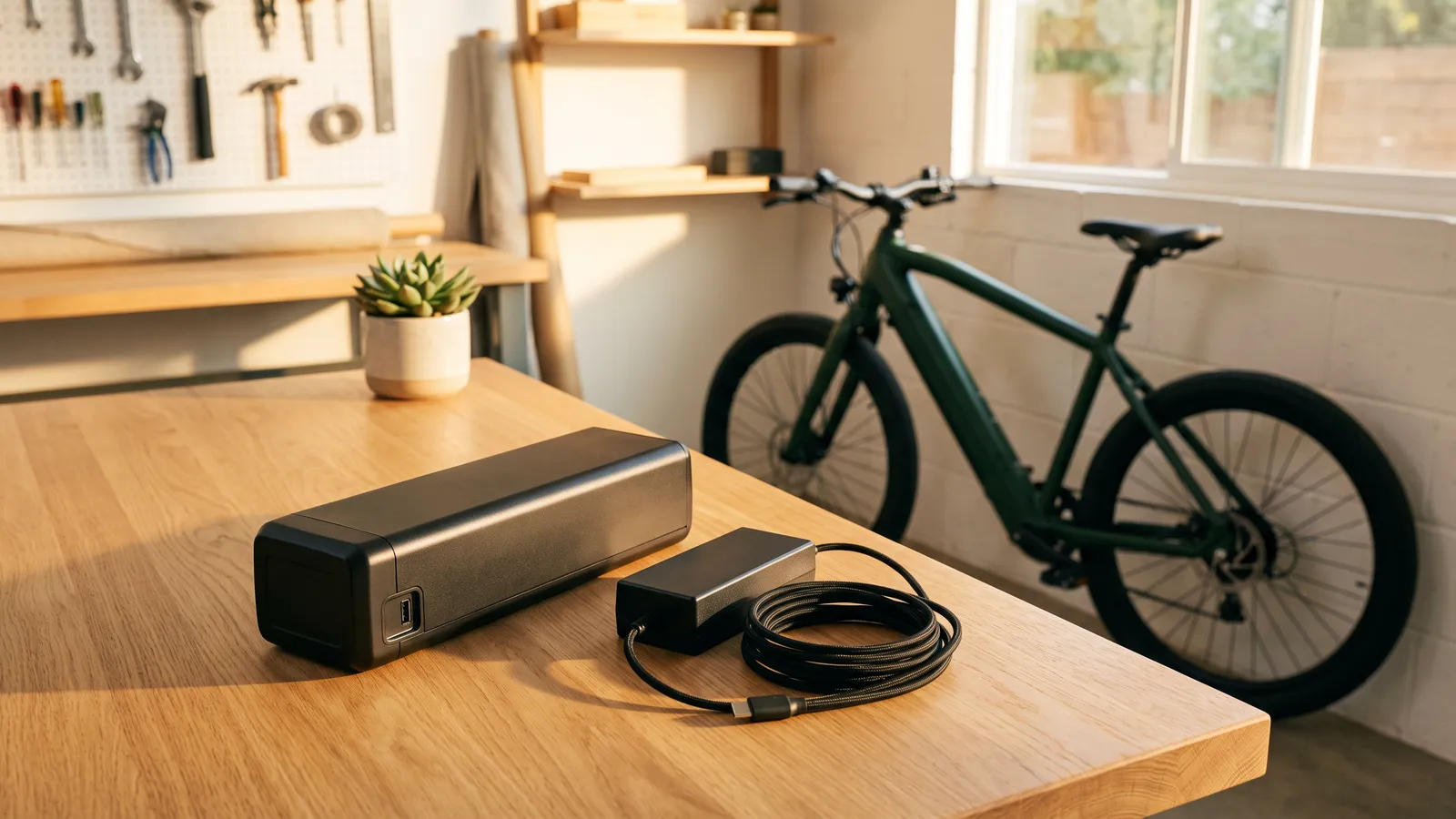
UL 2849 is a safety standard for the electrical system of an e-bike: the drive unit, battery, battery management system, wiring and charging inlet. A bike "certified to UL 2849" means a testing laboratory has certified that electrical system to the standard. It is not a guarantee that a battery can never fail, and it does not cover the whole bike. To check a bike, look on the maker's product page or manual, and ask the maker if it is not stated.
What UL 2849 covers
According to the Standards Council of Canada's database and trade coverage of its publication, UL 2849 is the standard for "Electrical Systems for eBikes." The current listing is ANSI/CAN/UL 2849:2022A, and UL first published the standard in January 2020. Sources describe it this way:
- It covers the electrical system of e-bikes powered by a rechargeable lithium-based battery, pedal-assist and non-pedal-assist alike.
- The baseline system is the drive unit, battery, battery management system, interconnecting wiring and power inlet.
- Off-board chargers are in its scope.
- It does not cover the bike's mechanical structure, such as the frame or brakes.
Our summary rests on those listings, not on the standard's text, which UL sells. Read the standard itself for the exact requirements.
What certification does and doesn't tell you
| It tells you | It doesn't tell you |
|---|---|
| The electrical system was evaluated by a laboratory against UL 2849 | That the frame, brakes or tires are safe |
| The maker wants to show compliance | That aftermarket or replacement batteries are certified |
| A named standard you can look up | That a battery will never fail |
CPSC staff, in a 2023 letter to standards bodies, advised consumers to use only e-mobility products certified by a third-party laboratory to the relevant standards, to use only chargers certified for the product, and never to use a battery pack modified or reworked by unqualified people or using repurposed or used cells. The same letter says compliance should be shown through certification from an accredited testing laboratory. CPSC has also drafted a proposed rule on lithium-ion batteries in micromobility products, so check cpsc.gov for its current status.
How to check a bike has UL 2849
- Open the maker's product page and look at the specs or safety section. Some makers say "UL 2849 certified" there. Our own bike pages show a bike as certified only when the maker's page says so.
- Read the manual. Look for UL 2849 and for the maker's rules on chargers and batteries.
- Look at the battery and charger labels. Check for a laboratory mark and for your bike's model on the label, as your manual describes.
- Ask the maker in writing if it isn't stated: which components are certified, by which laboratory, and whether the replacement battery and charger are covered.
- Be careful with look-alike wording. "Meets UL standards" or "UL-certified cells" is not the same as an electrical system certified to UL 2849. If wording is vague, ask.
Certification covers the system as sold. Replacement packs from other sellers are a separate question: the maker's own replacement is the one to ask about.
Short battery safety pointers
These come from CPSC's Micromobility Information Center and makers' manuals:
- Be present when charging.
- Use the charger provided with or recommended by the maker.
- Use only a replacement or secondary pack tested and approved to work safely with your device.
- Never use a pack modified or reworked by unqualified people.
- Do not put lithium batteries in the trash or general recycling.
- Report a battery problem on SaferProducts.gov.
For problems charging, see e-bike battery not charging.
If a battery is swollen, hot, leaking, smoking or smells unusual, stop using it, don't open it and don't try to repair it. Contact the maker or a qualified e-bike shop, and follow your manual's emergency advice.
Use only the maker's charger, follow the manual, and see the CPSC Micromobility Information Center. This is general information, not safety certification advice.
Based on public listings, CPSC material and makers' pages, not laboratory testing.
Sources (5)
- Standards Council of Canada database: ANSI/CAN/UL 2849:2022A, Electrical Systems for eBikes
- Bicycle Retailer and Industry News: New e-bike standard published by UL (14 Jan 2020)
- CPSC staff letter to standards bodies on UL 2849 and UL 2272, 10 February 2023
- CPSC Micromobility Information Center
- Lectric XP product page (example of a maker listing UL 2849)
Last checked Oct 23, 2026
Keep reading
 GuideE-bike battery not charging: safe checks to try firstWhy is my ebike battery not charging? Safe checks: power switch, outlet, charger light, plug, temperature and display codes. Then contact the maker.
 GuideE-bike error codes list: find your brand and displayE-bike error code list hub: find your display, then go to Bosch, Bafang, Lectric, Shimano or Aventon codes, with safe checks that apply to every bike.
 GuideE-bike classes explained: Class 1, 2 and 3 definitionsClass 3 ebike definition and Class 1 and 2 explained: motor assist, throttle and speed cut-offs, where each can usually ride, and how to check your state.