
Tubeless e-bike tires vs tubes: which, and what to ask
Last checked Oct 30, 2026 · By EbikePost editors
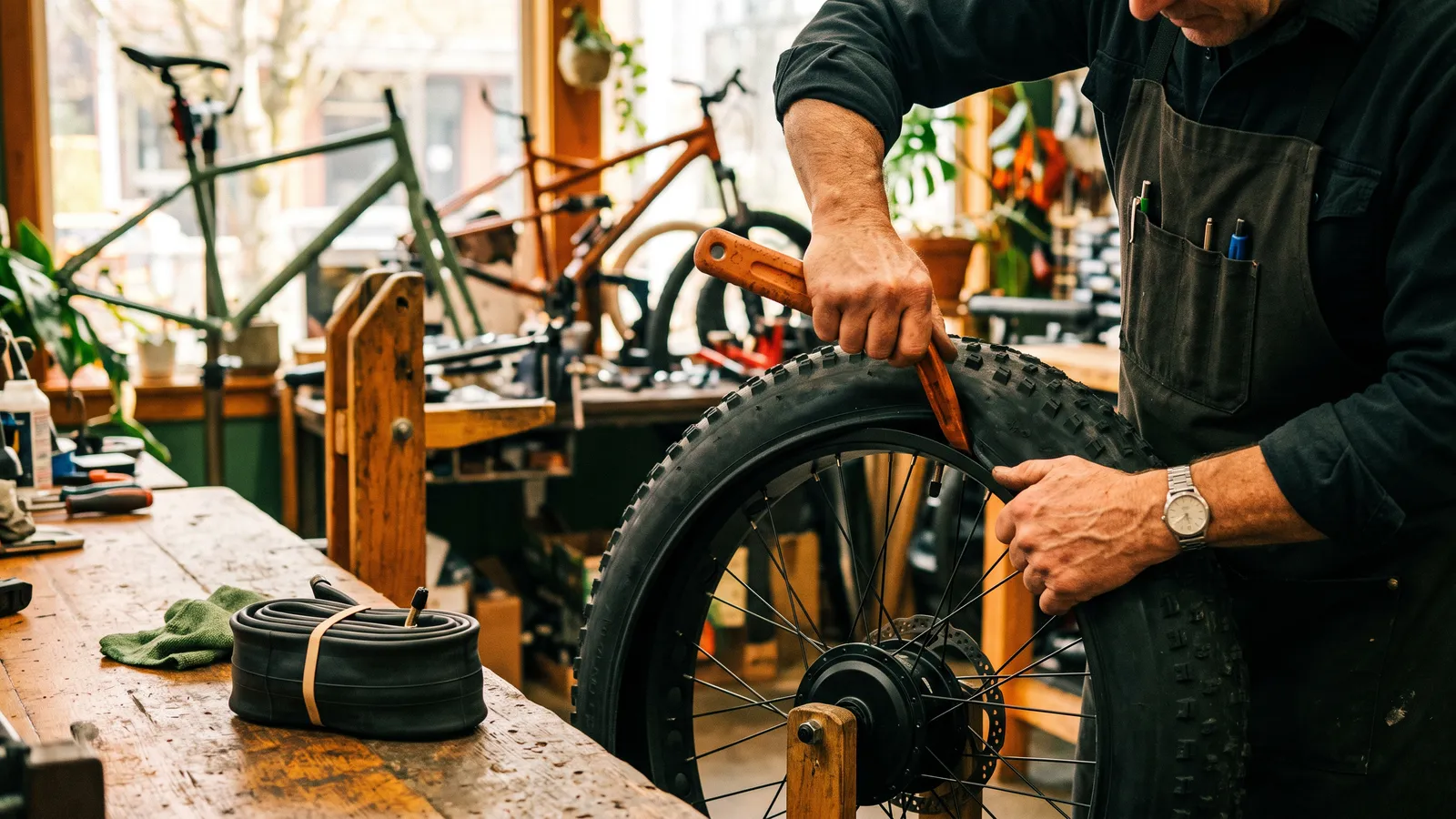
Many e-bikes come with tubes: Aventon, for one, says all its tires are tubed. Check your own bike's spec and the tire sidewall. Tubeless tires can run at lower pressure and get fewer flats, says Schwalbe, but they need a tubeless-compatible wheel, sealant that has to be renewed, and a careful setup. Schwalbe says tubes are the low-maintenance choice. Converting an e-bike is a conversation with a shop, not a weekend job from a video.
Search "puncture-proof e-bike tires" and you'll find lists that skip the trade-off. Tubeless isn't free flat protection. It swaps one kind of upkeep for another.
How to tell what you have
- Read the sidewall and the spec sheet. Schwalbe uses "TLR" on its labels for tires that work tubeless or on hookless rims, and "Non-TLR" for those that don't.
- Ask the maker. Aventon states in print that all its tires are tubed. Other makers publish tire specs on product pages or in the manual.
What tubeless changes
Schwalbe's tubeless page makes these points:
- Flat risk is "significantly lower," because sealant closes small punctures. It says holes seal "within tenths of a second." But "only in the case of very serious damage such as larger cuts" does sealant not help.
- You can ride tubeless at lower pressure without losing performance. Schwalbe gives no figure, and you still stay inside the limits printed on the tire. See our pressure guide.
- Sealant doesn't last forever. Schwalbe says its Doc Blue sealant stays active for around 2,000 km (about 1,240 miles) or 2 to 7 months and should be checked and replaced before a large tour. That's for Schwalbe's sealant. Others differ.
- The system is demanding. Schwalbe says it needs a wheel the maker has approved for tubeless use, that you should be familiar with the assembly or leave it to a professional, and not to use CO2 cartridges for inflation. (Aventon's repair guide does describe CO2 for seating a tubeless tire in the field, which is a disagreement worth knowing about. Follow your tire maker.)
- Tubes are simpler. Schwalbe's own words: "If you are looking for a low-maintenance set-up, then the conventional tube system is the right choice for you."
Tubes
Tubes are cheap, familiar and fixable on the road, and every shop can deal with them. The costs are that a thorn can puncture them, and Schwalbe's mounting page warns about trapping the tube between the tire and rim, and about covering spoke holes with the right rim tape. Low pressure shortens tire life either way. For what to do when one goes, see e-bike flat tire.
Converting to tubeless: ask a shop
We stop short of conversion steps. On an e-bike there is more at stake: wide, heavy tires, motors in the wheel, and rims that may not be tubeless-ready. Before you ask a shop, find out:
- Is my rim approved by its maker for tubeless?
- Is my tire marked tubeless-ready (TLR)?
- Which sealant, and when does it need replacing?
- Can a rear hub-motor wheel be worked on, and how is it done?
- How will a flat on the road be handled, since tubeless tires can't be repaired with stick-on patches (Park Tool says a plug tool is needed)?
If any answer is unclear, staying on tubes is a perfectly good choice.
How long do e-bike tires last?
Makers rarely publish an e-bike tire mileage. Schwalbe gives typical lifespans by tire family: 2,000 to 5,000 km for standard tires, 6,000 to 12,000 km for Marathon tires, noting it depends on pressure, load, road surface, temperature and rider. Those are Schwalbe's figures, not a promise for your tire. Lectric lists tires and tubes as wear items and puts a tread-wear check on its quarterly list.
What you can do yourself:
- Replace a tire at its wear limit: Schwalbe says that's when the puncture-protection layer or carcass threads show through the tread.
- Look at the sidewalls. Schwalbe says sidewalls often fail before the tread is worn out, usually from riding at too low a pressure, with a few large cracks near the top suggesting fatigue and small even cracks suggesting age.
- Check pressure with a gauge at least monthly, using a pump with a gauge.
Whatever you run, the sidewall limits and the rim's own limit still apply. Don't copy a pressure from a forum post.
See a shop for tubeless conversion, sealant setup, any tire that won't seat, a bulge, cut or exposed casing, and any wheel work on a hub-motor bike. Don't open the motor, controller or battery.
Questions
Do e-bike tires have tubes?
Often, yes. Aventon says all its tires are tubed. Check your bike's spec.
Are tubeless e-bike tires better?
They can run lower pressure with fewer flats, per Schwalbe, but they need compatible wheels and sealant upkeep. Schwalbe calls tubes the low-maintenance option.
How do I make my e-bike tires puncture proof?
There's no such thing. Tubeless with sealant lowers the risk of small flats, sealant doesn't help with large cuts, and correct pressure and fresh tires help either way.
How long do e-bike tires last?
Schwalbe's range is 2,000 to 12,000 km depending on the tire family and use. Replace at the wear limit or when sidewalls crack.
How often should I change my e-bike tires?
When tread reaches the wear limit or the sidewalls are damaged, not on a calendar.
Written from tire and e-bike makers' pages, not from riding or tests. Your tire and wheel maker decides.
Sources (7)
- Schwalbe: Tubeless (lower flat risk, can run lower pressure; needs a tubeless-compatible wheel; sealant renewal; do not use CO2; leave assembly to a professional if you are unfamiliar; tubes are the low-maintenance choice)
- Schwalbe: Mounting tires (TLR and Non-TLR tire markings; hookless rims; tubeless rim tape)
- Schwalbe: Tire wear (wear limit, typical lifespans by tire family, fatigue and aging cracks, sidewalls often fail first)
- Schwalbe: Tire pressure (stay inside sidewall limits; gauge; at least monthly)
- Aventon: Ebike Tire Repair, Tubed and Tubeless Tires (all Aventon tires are tubed; tubeless plug and sealant)
- Park Tool: How to Patch a Tire and Tube (tubeless tire bodies cannot be patched with stick-on patches)
- Lectric XP 4 User Manual v1.3 2025 (tires and tubes listed as wear items; check tread quarterly; inflate within the sidewall range)
Last checked Oct 30, 2026
Keep reading
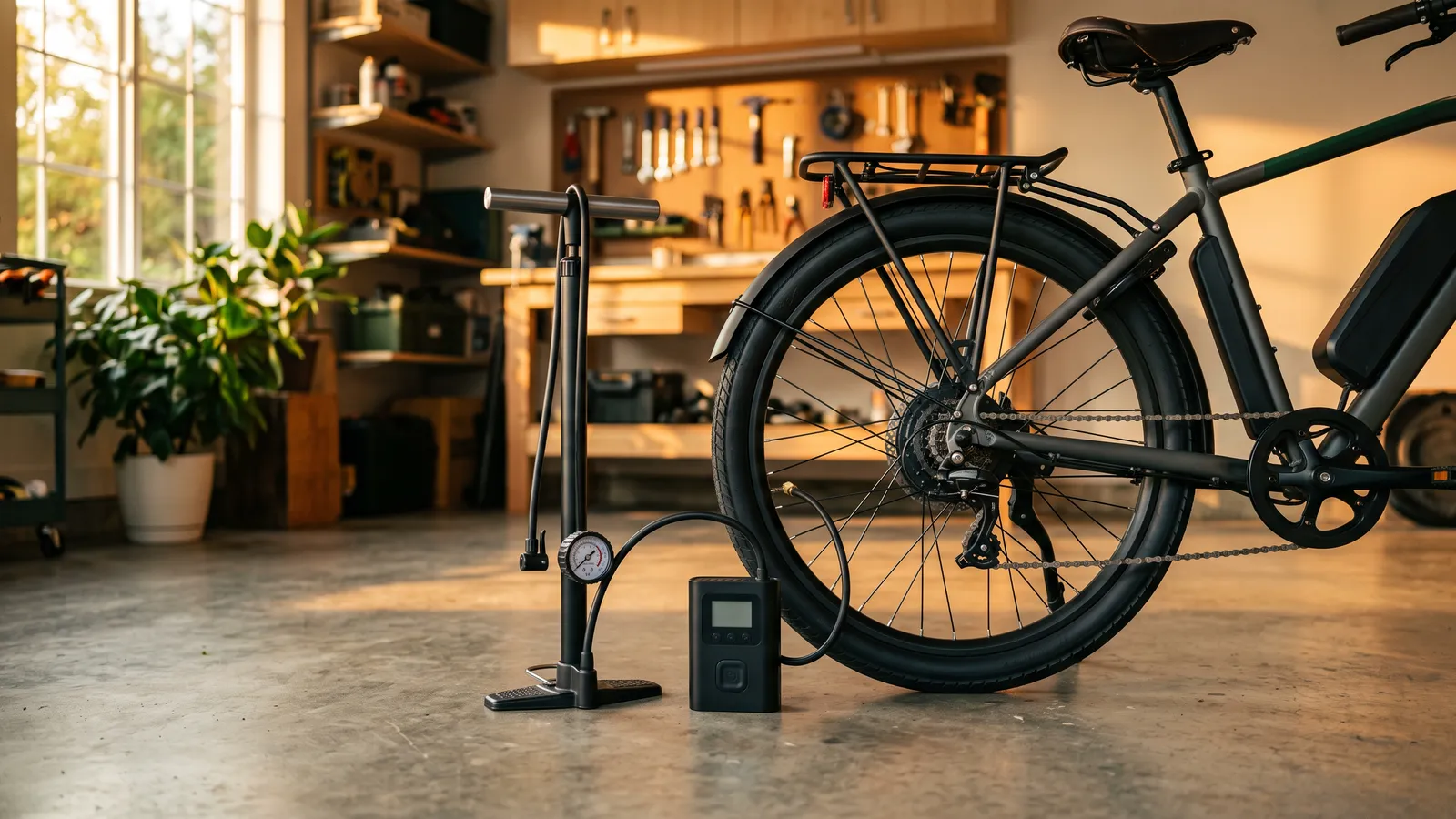 GuideE-bike tire pressure: how to set PSI for your tiresWhat should my e-bike tire pressure be? Start from the sidewall range, use a gauge, adjust for load within limits, per Schwalbe, Lectric and Aventon.
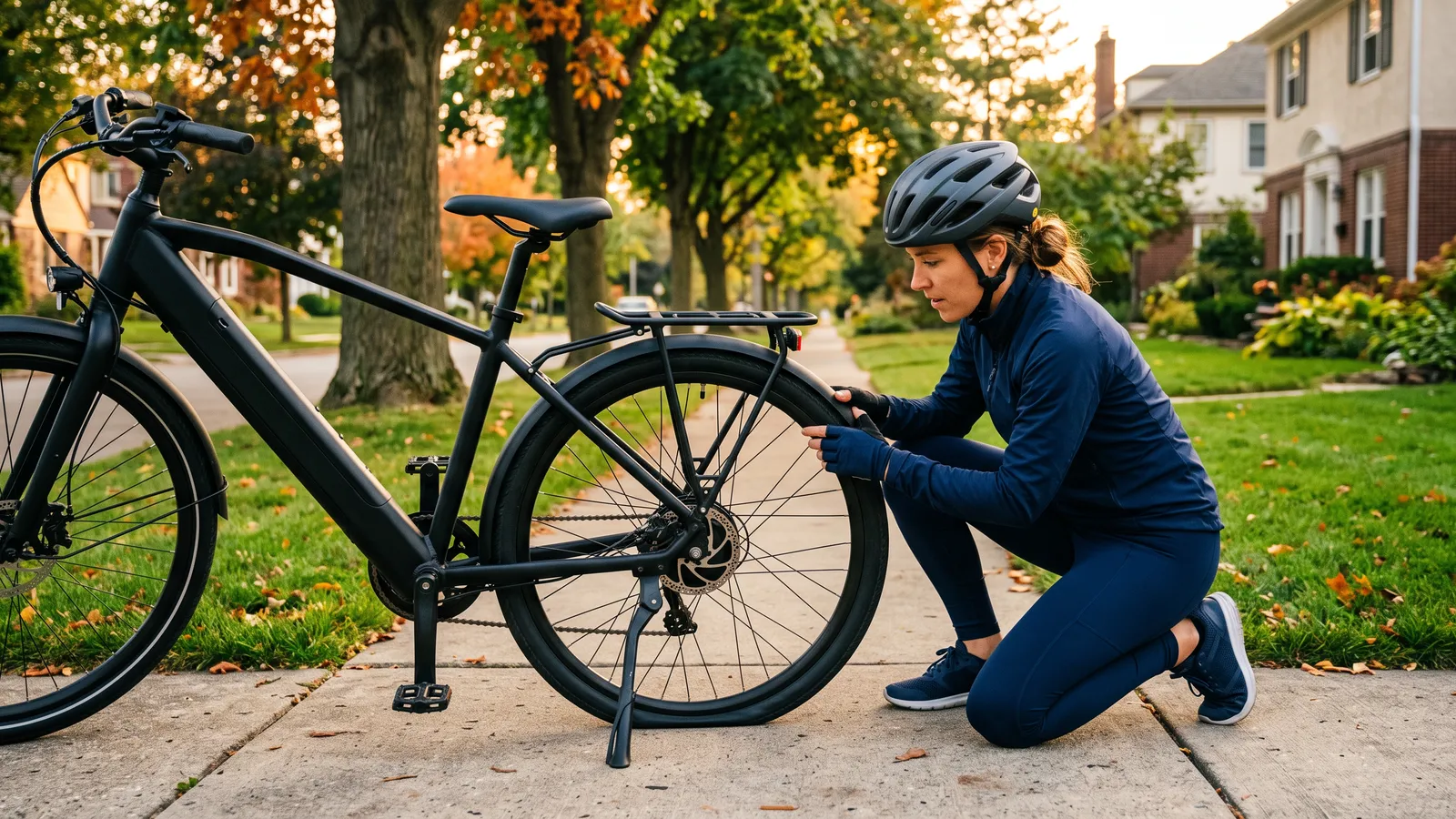 GuideE-bike flat tire: what to do and when to see a shopE-bike flat tire repair: what to check, how to walk home, patch or tube basics, and why a rear hub-motor wheel is a manual-or-shop job. Aventon, Rad, Park Tool.
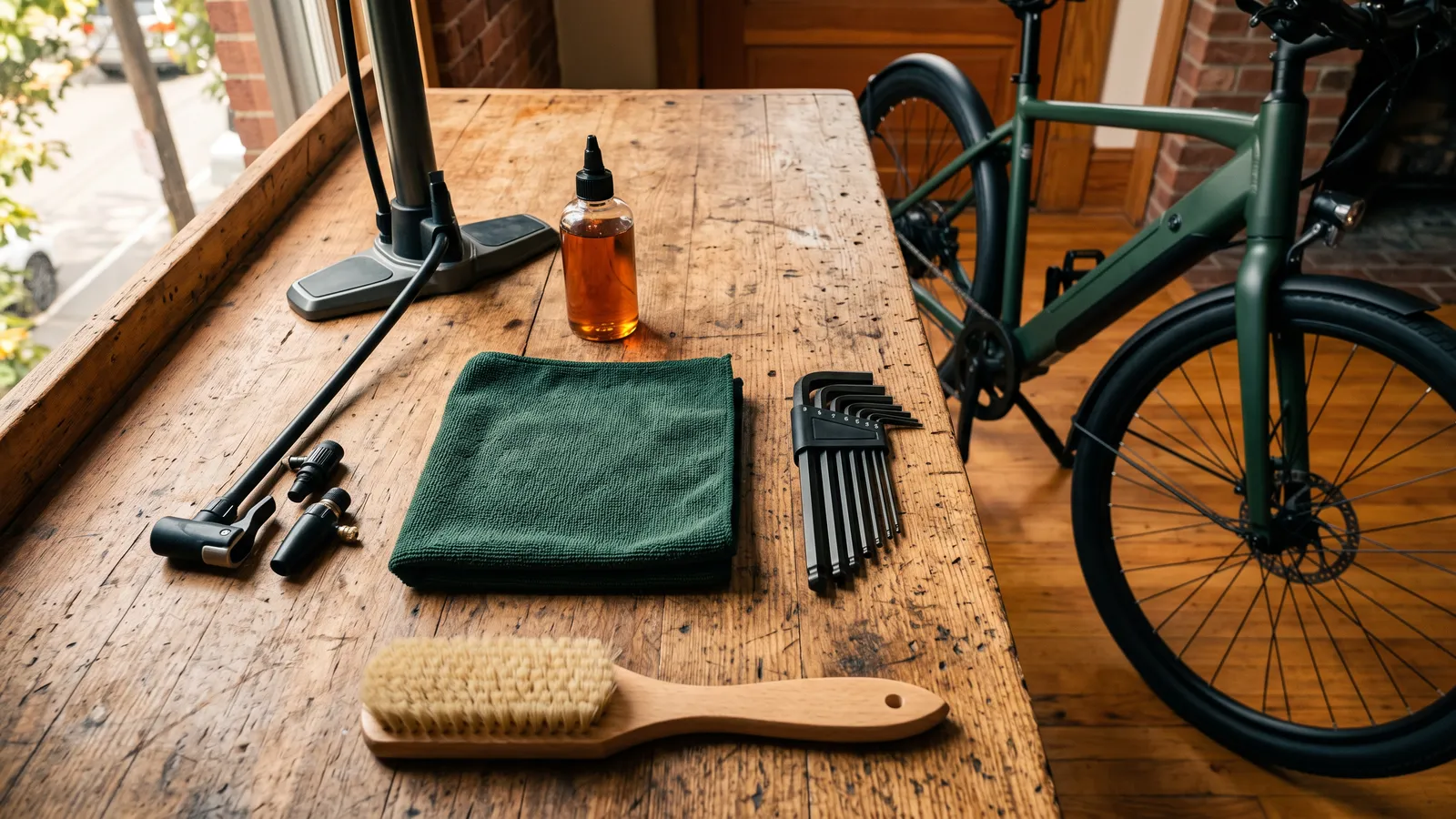 GuideE-bike maintenance schedule: what to do and whenAn e-bike maintenance schedule built from Lectric, Aventon, Rad and Bosch pages: pre-ride, weekly, monthly checks and when a shop should service it.