
E-bike vs moped vs scooter: how US laws treat each
Last checked Oct 25, 2026 · By EbikePost editors
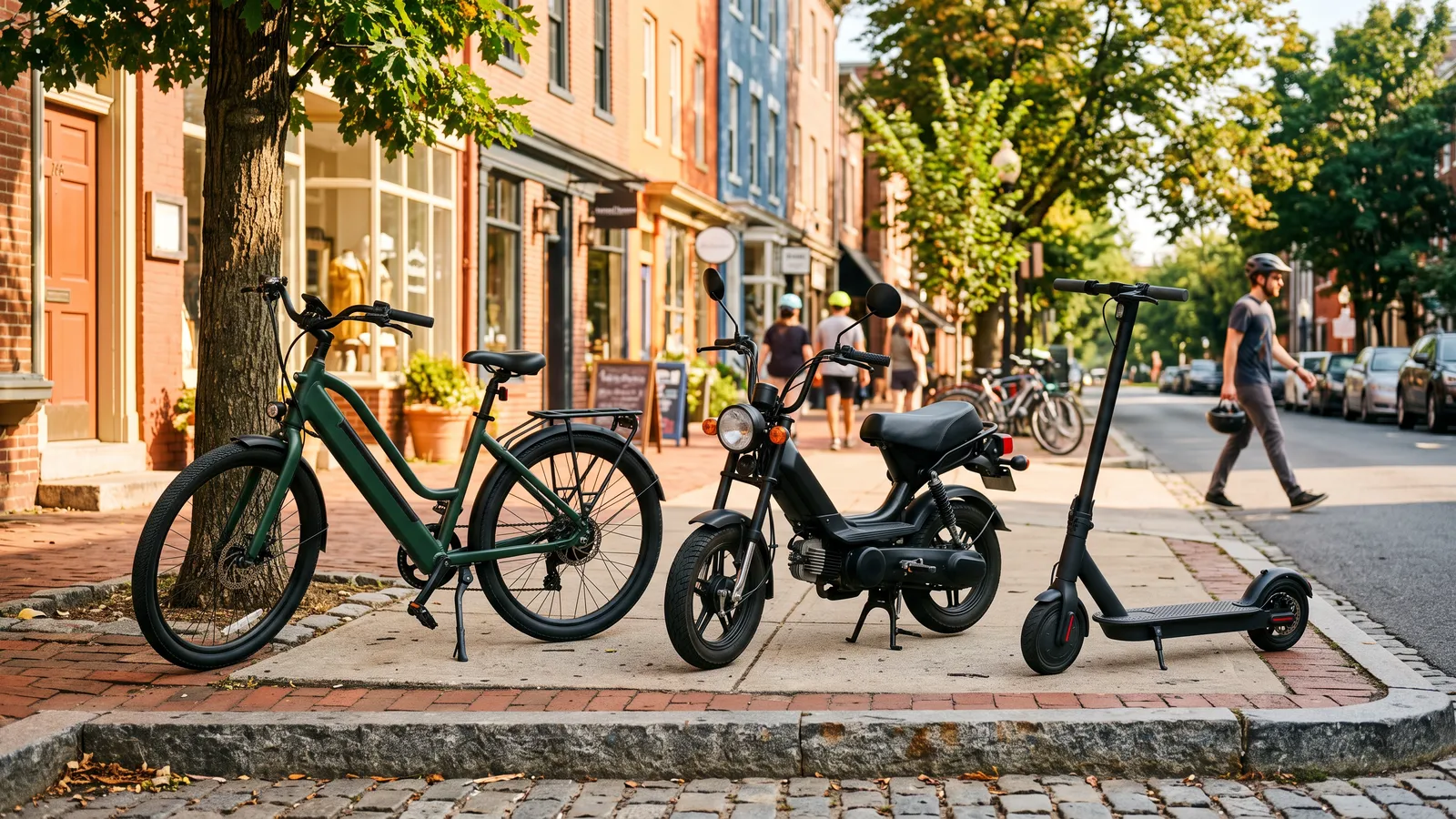
In most of the states we've read, a bike with working pedals and a motor under 750 W that fits a class (1, 2 or 3) is treated like a bicycle: no license, registration or insurance. A moped or electric scooter that falls outside that definition is usually handled under different rules, and a few states, such as Pennsylvania and D.C., don't use the three classes at all. Federal law only defines the slow end, bikes under 20 mph on motor power alone. Everything about who can ride and where is state law, so check yours at /laws/.
You see a "750 W, 28 mph" bike for sale next to a throttle moped, and the listing calls both "electric bikes." The label on the ad doesn't decide what the law calls it. The definition in your state does.
What federal law says
Federal law draws one line, and it's about product safety. Under 15 U.S.C. 2085, a "low-speed electric bicycle" is a two- or three-wheeled vehicle with fully operable pedals and an electric motor of less than 750 watts, whose top speed on a paved level surface, powered only by the motor with a 170-pound rider, is less than 20 mph. The statute puts these bikes under the Consumer Product Safety Commission (CPSC) and its bicycle rule, 16 CFR part 1512.
Two things follow:
- The federal definition is about the motor-only speed. A Class 3 bike that assists to 28 mph doesn't match it as written, which is part of why CPSC asked for comment on possible changes in a 2024 notice.
- The statute says nothing about where you can ride or who can ride. That's left to the states, and in practice to cities, parks and trail managers.
What the states do
Most of the verified states in our state law checker have adopted the three-class model: Class 1 and 2 stop assisting at 20 mph and Class 3 at 28 mph, with a motor under 750 W. In those states an e-bike is defined as a type of bicycle. Some examples from our entries:
- Kansas says e-bikes are not motor vehicles, so no license, registration, title, plate or insurance is required.
- Georgia says an e-bike isn't a motor vehicle and needs no license or permit. Georgia's moped-age section is separate, and under it nobody under 15 may operate an e-bike on public roads.
- New York limits Class 3 to New York City and sets 16 as the minimum age to operate any e-bike, per the state DOT.
A few places don't use the classes:
- Pennsylvania defines one "pedalcycle with electric assist" (under 100 lb, motor up to 750 W, no more than 20 mph on motor power). PennDOT says a 28 mph Class 3 bike doesn't fit that definition.
- D.C. defines a "motorized bicycle" as one whose motor can't push it faster than 20 mph on level ground. The 28 mph Class 3 doesn't fit there either.
What that means for a faster bike in those two places, we don't say here. Ask the agency or read the statute.
Moped, scooter, motorcycle: where the lines usually fall
We don't give a single national rule for mopeds, scooters or motorcycles, because there isn't one. Each state writes its own vehicle code. The way to think about it:
| Vehicle | What decides its category |
|---|---|
| E-bike | Working pedals, a motor under 750 W, and a top assisted speed that fits a class in your state. The label on the bike should say class, top assisted speed and wattage. |
| Moped / motor-driven cycle | Your state's own definition. A vehicle outside the e-bike definition may be handled under these rules; check your state. |
| Electric kick scooter | Usually a separate local or state category. We haven't verified scooter rules state by state. |
| Motorcycle | Your state's motorcycle rules, which usually mean a license endorsement and registration. Check with your DMV. |
The detail that trips people up is the definition itself. The federal statute and the state laws we've read all start with fully operable pedals and a motor under 750 W (or, in D.C. and Pennsylvania, a 20 mph limit on motor power). A vehicle that doesn't meet your state's e-bike definition isn't covered by the e-bike exemptions, and we haven't confirmed how each state then classifies it. If a bike is borderline, ask your state agency before you buy.
This is general information, not legal advice. Our entries come from statutes and state agency pages and may not reflect changes since we last checked. Use the state law checker to find your state and follow its link to the statute.
How to check a specific bike
- Read the label. In states that require one, it shows class, top assisted speed and motor wattage.
- Look up your state on /laws/. If it's marked unverified, go to your state's DMV or transport agency.
- Check the maker's page for top assisted speed and whether the pedals work with the motor off. See e-bike classes explained.
- Check local rules for parks, paths and trails, which can be stricter than the state.
- Don't change the bike's settings to alter its top assisted speed. That can change which category it's in.
Common questions
Is an e-bike a moped? Not under the three-class laws we've read. They define the e-bike as a bicycle type. A bike that falls outside the definition may be treated as a moped or motor vehicle instead.
Do I need a license or insurance? Under the states we've verified, usually not for a bike that fits the e-bike definition. See do you need a license for an e-bike for a state-by-state table.
Is a 28 mph Class 3 bike legal everywhere? No. New York limits Class 3 to New York City, and several states bar anyone under 16 from riding one.
What does the federal rule cover? Product safety for bikes under 20 mph on motor power alone. It doesn't decide where you can ride.
What about electric scooters? We haven't verified scooter rules. Check your state and city.
Sources (7)
- 15 U.S.C. 2085, Cornell Legal Information Institute: low-speed electric bicycles
- Federal Register, 15 March 2024: CPSC advance notice on electric bicycles (16 CFR part 1512 and the low-speed e-bike definition)
- D.C. Code 50-2201.02 (motorized bicycle definition), D.C. Council
- PennDOT PUB 944: micromobility (pedalcycle with electric assist)
- Georgia HB 454 (2019): e-bike act and moped-age section
- New York State DOT: bicycle FAQs (e-bike classes, age, helmet, where to ride)
- Kansas statutes K.S.A. 8-1592b (e-bikes are not motor vehicles)
Last checked Oct 25, 2026
Keep reading
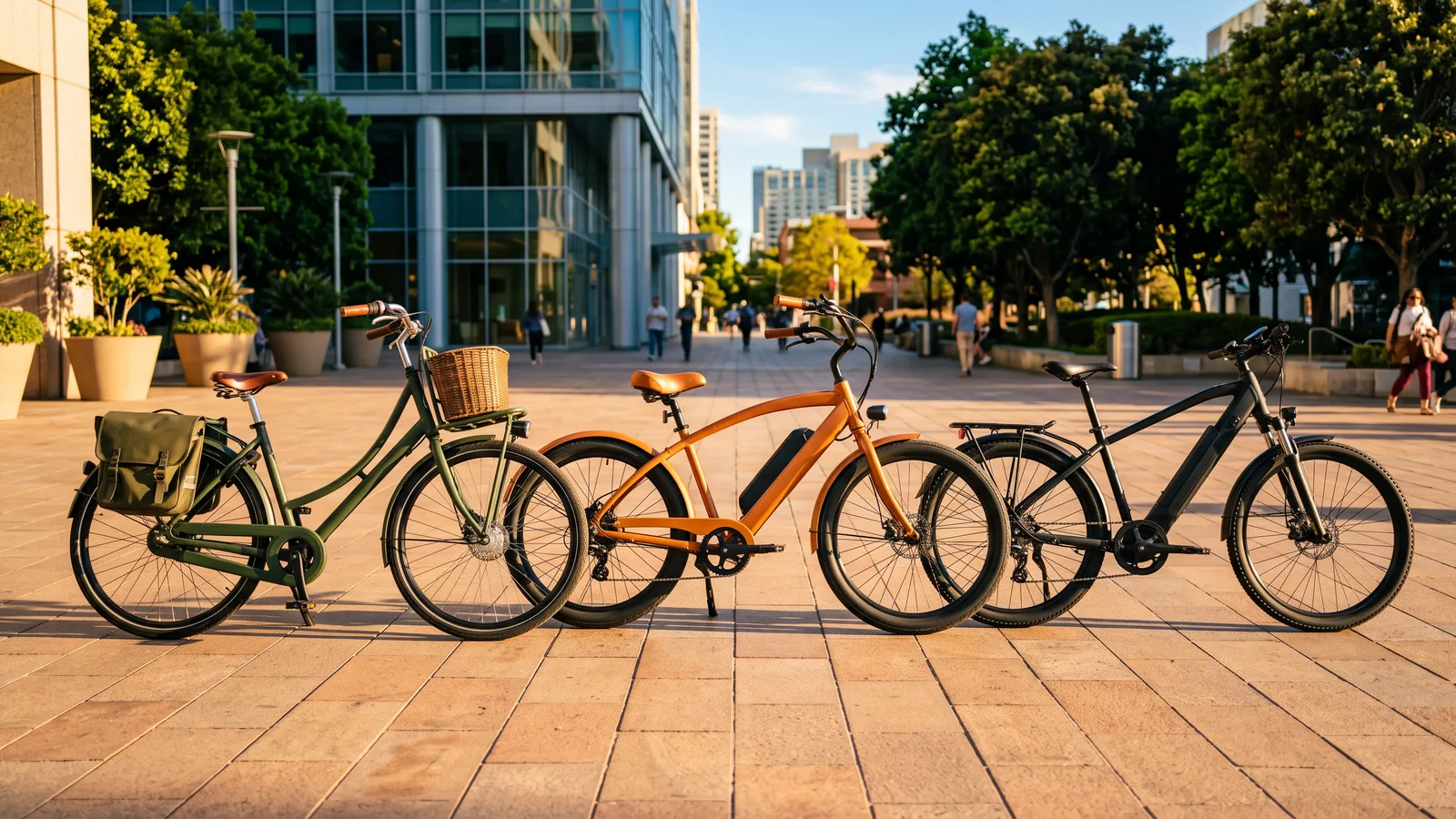 GuideE-bike classes explained: Class 1, 2 and 3 definitionsClass 3 ebike definition and Class 1 and 2 explained: motor assist, throttle and speed cut-offs, where each can usually ride, and how to check your state.
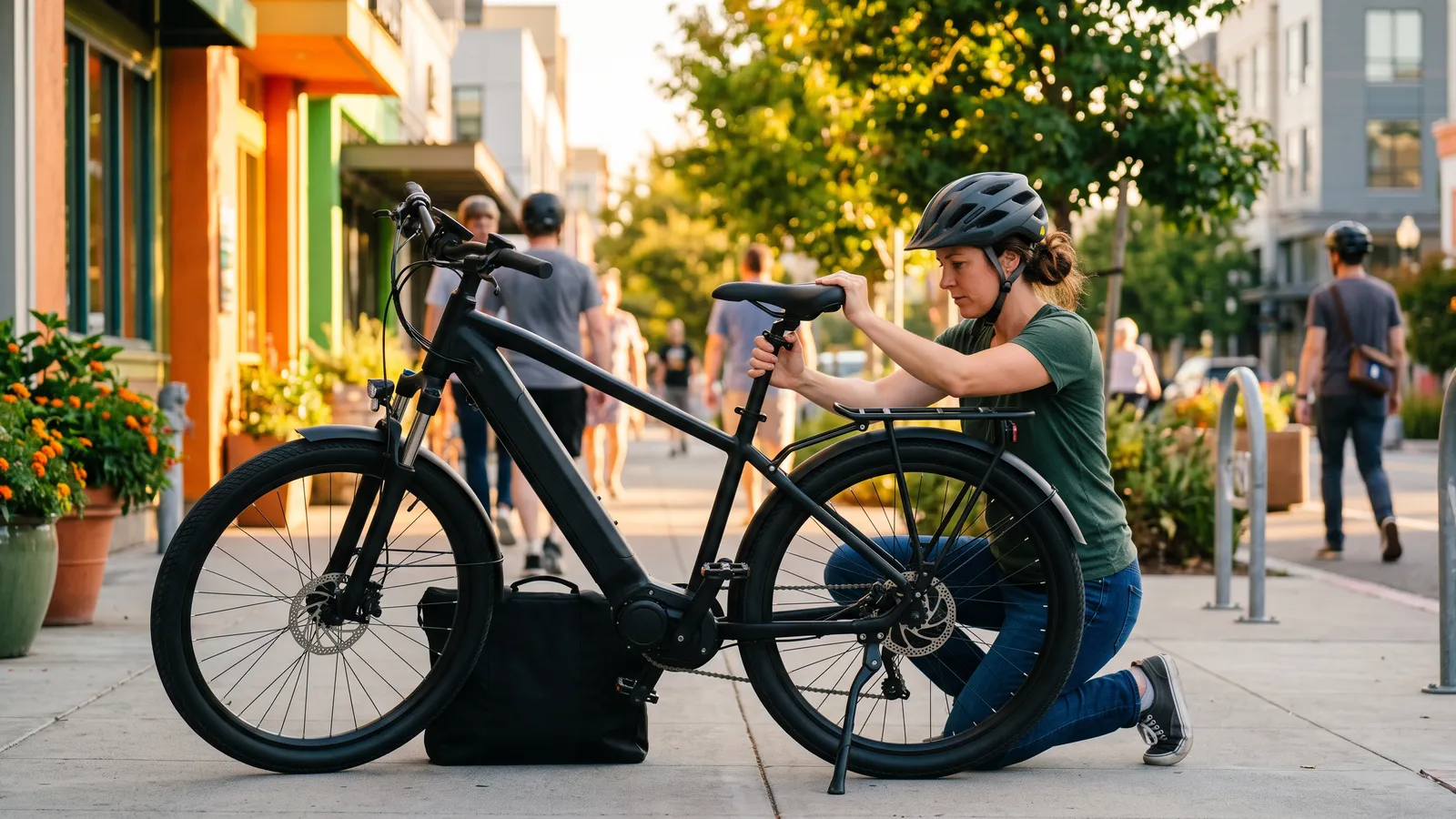 GuideWhat size e-bike do I need? Ebike size guide by heightEbike size guide: how to use the maker's rider height range, frame style, standover and saddle height to pick an e-bike that fits before you buy.