
NTA 8776 helmets: what the e-bike standard means
Last checked Nov 9, 2026 · By EbikePost editors
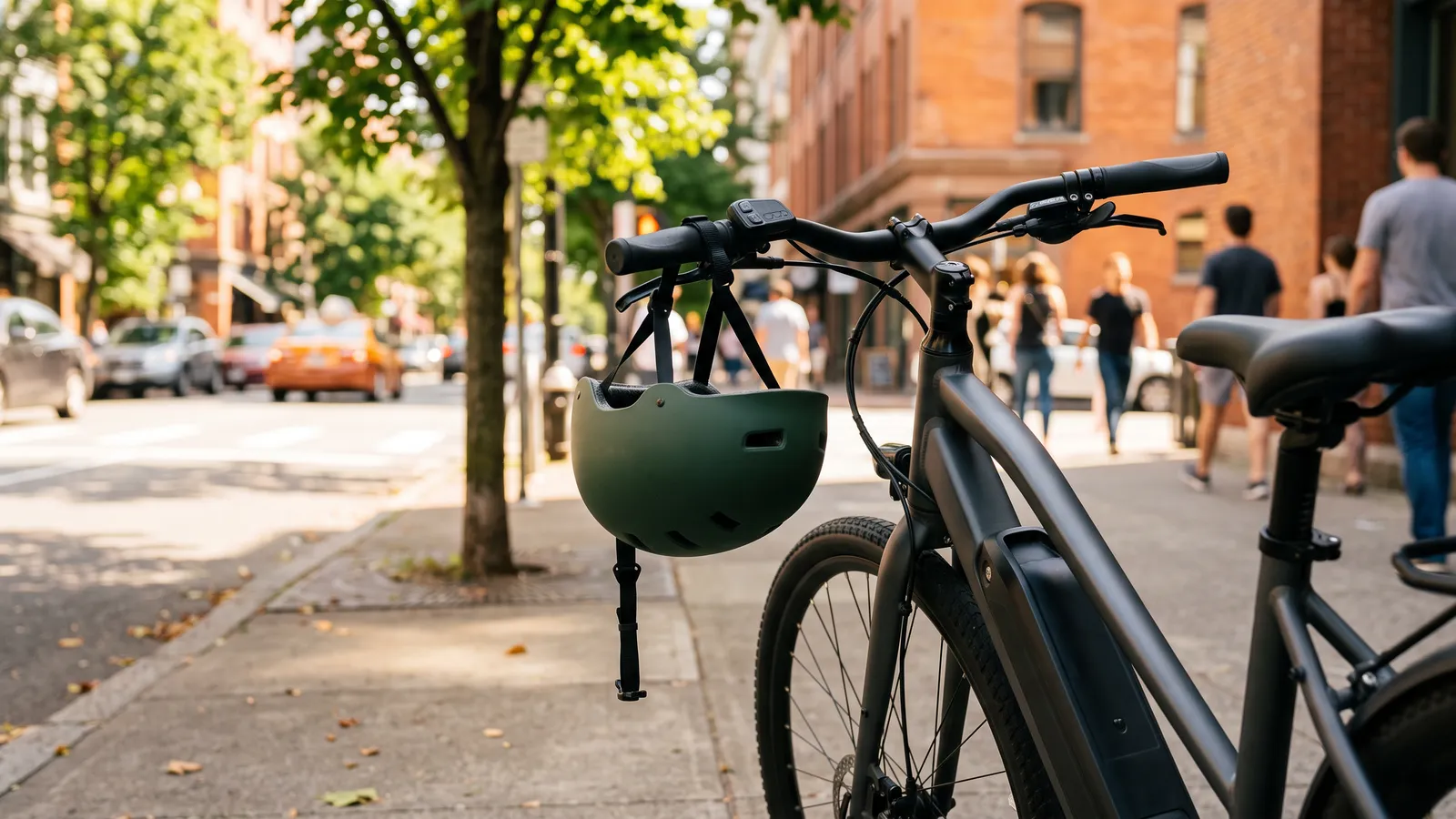
NTA 8776 is a Dutch helmet standard written for riders of speed pedelecs, e-bikes that assist up to 45 km/h (about 28 mph). According to NEN, the Dutch standards body that publishes it, an NTA 8776 helmet looks like a bike helmet but is designed for higher impact speeds and covers more of the head, especially the temples and the back. It isn't required in the US. The federal rule for any helmet sold here as a bicycle helmet is CPSC's 16 CFR 1203, and NTA 8776 is a voluntary extra. To check a helmet, look for "NTA 8776" marked inside it and on the maker's product page. Five helmets whose maker pages list it are below.
You're shopping for a helmet for a Class 3 bike, and half the listings say "NTA 8776 certified" like you're supposed to know what that means. Here's what's behind the label, what it doesn't mean, and how to check a claim yourself.
What NTA 8776 is
"NTA" stands for Nederlandse Technische Afspraak, a Dutch technical agreement. NEN lists the document as NTA 8776, "Helmets for S-EPAC riders." S-EPAC is the formal name for a speed pedelec. NEN's listing shows the current edition as NTA 8776:2016-12.
The Dutch government's 2016 decree on speed pedelecs (Staatsblad 2016, 427) explains where it came from. NEN, the RAI Association and the research institute TNO developed it as a helmet that gives speed-pedelec riders more protection at higher speeds than the ordinary bicycle helmet standard, EN 1078.
Its legal role is Dutch. Since 2017, speed-pedelec riders in the Netherlands have had to wear a helmet, and NEN says they can wear an NTA 8776 helmet instead of a full moped helmet. Since January 1, 2023, NEN says, snorfiets (low-speed moped) riders in the Netherlands may wear one too.
What it tests, and how that compares with CPSC
NEN says NTA 8776 sets requirements and test methods for:
- Construction, including field of vision
- Shock-absorbing properties
- The retention system, including the chin strap and fastening
- Marking and information
NEN sells the full text, and we haven't read it, so we won't quote its drop heights or limits. NEN's own summary is the useful part: compared with a bike helmet, an NTA 8776 helmet is built for higher fall speeds and more head coverage.
The US rule, 16 CFR 1203, is public, so we can be specific about it:
| CPSC 16 CFR 1203 | NTA 8776 | |
|---|---|---|
| Who issues it | US Consumer Product Safety Commission | NEN (Netherlands) |
| Legal status in the US | Mandatory for any helmet marketed for bicycling | Voluntary |
| Written for | Bicycle riders | Speed-pedelec (up to 45 km/h) riders |
| Tests | Peripheral vision, positional stability, retention system strength, impact attenuation | Field of vision, shock absorption, retention system, marking (per NEN) |
| Impact test | Flat anvil at 6.2 m/s; hemispherical and curbstone anvils at 4.8 m/s; peak no more than 300 g | Not public; NEN says higher fall speeds than a bike helmet |
| Conditioning | Ambient, hot, cold and water immersion | Not public |
CPSC's business guidance says a bicycle helmet is any headgear marketed as protecting a bicycle rider. So an NTA 8776 helmet sold in the US as a bike helmet still has to meet 16 CFR 1203. Four of the five helmets below mention CPSC on the maker's page. The fifth, Giro's Bexley, doesn't on its certifications tab.
Is NTA 8776 required in the US?
No. We found no US federal rule that refers to it. The federal requirement is CPSC's bicycle helmet standard, and NTA 8776 is a voluntary label on top. State helmet laws set who has to wear a helmet, and they point to US standards. Connecticut, for example, requires e-bike riders to wear a helmet meeting an ANSI, CPSC, ASTM or Snell standard (see our Connecticut e-bike laws page). Check your own state on /laws/.
Helmet laws vary by state, by e-bike class and by age. This is general information, not legal or safety advice. Read your state's current rule on /laws/.
How to tell a helmet is NTA 8776 certified
- Look inside the helmet. The Dutch decree says an NTA 8776 helmet is recognized by a marking inside it. Look for "NTA 8776" on the label.
- Check the US label too. 16 CFR 1203 requires a certification label reading "Complies with U.S. CPSC Safety Standard for Bicycle Helmets for Persons Age 5 and Older," or the version for age 1 and older. It must also give the US maker's or importer's name and address.
- Read the maker's product page, not a marketplace listing. Look for a certifications or specs line that names NTA 8776 for that exact model.
- Use NEN's register. NEN runs certification under its scheme NCS 8776 and keeps a public register of helmets certified to NTA 8776, linked from its speed-pedelec helmet page. NEN notes that certification under this scheme isn't yet done under accreditation.
- Watch the wording. "E-bike ready," "e-bike rated" or "designed for e-bikes" isn't the same as "certified to NTA 8776." If the maker's page doesn't name the standard, ask the maker.
Certification is per model. Giro's Camden and Bexley list NTA 8776, but that doesn't mean every Giro helmet does. Check the page for the helmet you're buying.
Helmets whose maker pages list NTA 8776
We checked each maker's own product page on November 9, 2026. We haven't worn or tested these helmets. This is what the makers state.
Bern Hudson MIPS
Bern's page says the Hudson "is built for e-bike rides up to 28 mph, with NTA 8776 certification." Its feature badges read "NTA E-Bike Certified" and "CPSC & EN1078 Safety Certified." It has MIPS and a Click-Mount LED light. Bern Hudson page.
Giro Camden Mips
Giro's Certifications & Weight tab reads "Certified to NTA 8776 Speed E-Bike Standard" and mentions CPSC and CE. Giro Camden Mips page.
Giro Bexley Mips
Giro's Certifications & Weight tab reads "CE EN1078; NTA 8776 Speed E-Bike Standard." That tab doesn't list CPSC, so confirm the CPSC label on the helmet or with Giro if that matters to you. Giro Bexley Mips page.
ABUS Pedelec 2.0
ABUS USA says the Pedelec 2.0 "is NTA 8776 certified." Its Tests & Certifications tab lists CPSC and NTA-8776. ABUS lists sizes M (52–57 cm, 420 g) and L (56–62 cm, 440 g), a rechargeable rear LED and a built-in rain cover. ABUS Pedelec 2.0 page.
UNIT 1 AURA Mips
UNIT 1's FAQ says the AURA "is E-bike certified with NTA 8776 up to 45 km/h" and is "compliant with CPSC and EN1078." The specs list 440 g in size medium and integrated front and rear lights. UNIT 1 AURA Mips page.
For fit advice and a CPSC-only option, see our best e-bike helmets roundup. For lights to go with your helmet, see e-bike lights.
FAQ
What does NTA 8776 certified mean? It means the helmet has been certified to NTA 8776, a Dutch standard for speed-pedelec helmets. NEN runs the certification scheme (NCS 8776) and a public register of certified helmets.
Do I need an NTA 8776 helmet for my e-bike in the US? No US federal rule requires it. A helmet sold here for bicycling has to meet CPSC 16 CFR 1203. Your state may require you to wear a helmet. See /laws/.
Is NTA 8776 better than CPSC? They're different standards. NEN says NTA 8776 is designed for higher fall speeds and covers more of the head than a bicycle helmet. We can't compare test numbers, because NEN sells the text and we haven't read it.
What is the safest e-bike helmet? We don't rank helmets by safety, because we haven't tested any. Compare what you can check: the CPSC label, whether the maker lists NTA 8776 for that model, and fit.
Where do I find the NTA 8776 mark? Inside the helmet, according to the Dutch decree that introduced the standard. Also check the maker's product page and NEN's register.
Sources (10)
- NEN: Speed-pedelec-helm certification and register (NTA 8776, NCS 8776)
- NEN: NTA 8776:2016 en, scope and edition history
- Staatsblad 2016, 427 (Dutch government gazette): speed pedelec rules and NTA 8776:2016
- eCFR: 16 CFR Part 1203, Safety Standard for Bicycle Helmets
- CPSC: Bicycle Helmets Business Guidance
- Bern: Hudson MIPS helmet
- Giro: Camden Mips helmet
- Giro: Bexley Mips helmet
- ABUS USA: Pedelec 2.0 helmet
- UNIT 1: AURA Mips helmet
Last checked Nov 9, 2026
Keep reading
- GearBest ebike helmets: CPSC and NTA 8776 picksBest ebike helmets from Bern, Giro and Thousand: which are certified to the CPSC bicycle standard or NTA 8776, plus what to check before you buy.
 GuideWhat is a Class 3 e-bike? Classes 1, 2 and 3 explainedA Class 3 e-bike assists only while you pedal, up to 28 mph. How Class 1, 2 and 3 differ, where each can ride, and how to check your bike and state.
 GearBest ebike lights: front and rear picks from Knog, LezyneBest ebike lights: battery-powered and bike-powered headlights and taillights from Knog and Lezyne, with lumens, runtime and what to look for.