
Why e-bike brakes squeal and what you can safely check
Last checked Oct 28, 2026 · By EbikePost editors
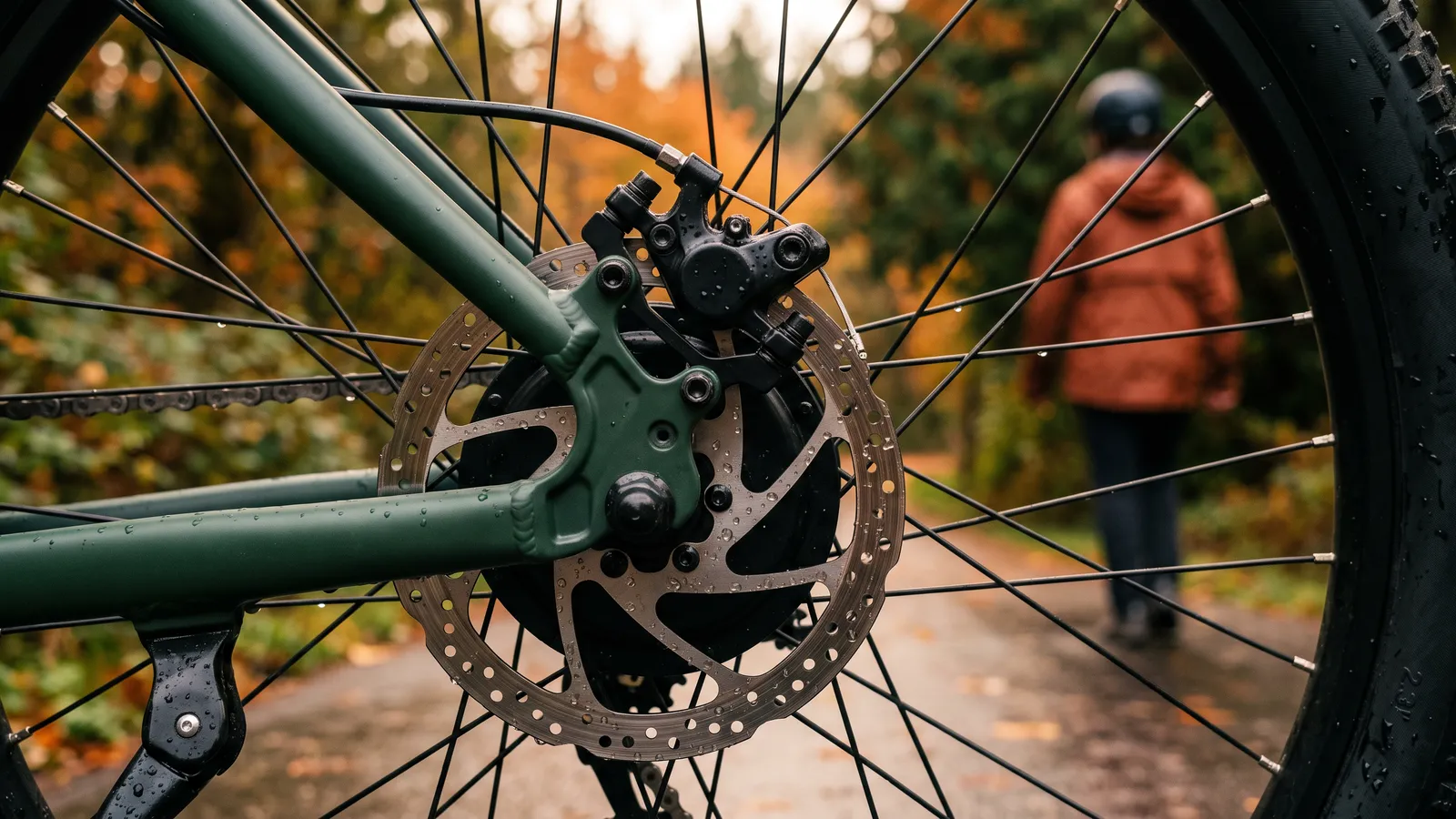
A squeal that shows up in rain and clears once the rotor dries is usually normal. A squeal that stays points to oil or lube on the pads or rotor, new brakes that aren't bedded in, glazed pads, worn pads or something loose. You can look at pad wear and keep spray off the rotors. Cleaning rotors with solvents, bedding in, aligning the caliper and swapping pads are jobs for your brake maker's manual or a shop.
E-bike brakes work harder than the ones on a regular bike. The bike is heavier, you're moving faster, and you brake more often. So a squeal gets your attention, and it should. Most of the time it's a nuisance. Sometimes it's the sound of pads that have run out.
The seven usual causes
Unior, a bike tool maker, lists the common causes of disc brake squeal. We haven't heard your brakes, so use this as a map for what to ask, not a diagnosis.
- Water on the rotor. Unior says wet-weather squeal is normal and should stop as the rotor dries.
- Contamination. Oil from chain lube, degreaser or a careless service can get onto the rotor or pads. Unior says if a cleaned rotor squeals again within a few stops, the pads have absorbed the contamination and need replacing.
- New brakes that aren't bedded in. Lectric's manual says new brakes need bedding in: braking force on the first 10 to 30 pulls isn't as strong, and you should ride somewhere safe, away from traffic, and stop 10 to 30 times before normal riding. Unior says the squeal stays until the pads lay an even film on the rotor, and that bed-in is repeated whenever pads or rotors are replaced.
- Glazed pads. Unior says overheating or dragging the brake hardens the pad surface so it looks shiny, and that "the only fix for a glazed pad is to replace it."
- A rotor touching a pad. A scrape or light squeal while coasting can mean a misaligned caliper, a stuck piston or a bent rotor.
- Worn parts. A harsh grind only under braking can mean the pads are at their limit. Lectric gives 4 mm as a new pad and says the pads must be replaced under 2.7 mm, which are Lectric's brakes' figures. Other brake makers state their own, so check yours.
- Loose hardware. A click or rattle that changes with the lever can be loose rotor bolts or a lockring, or play elsewhere in the headset or hubs.
What you can safely do
These are the owner steps we're comfortable with. Everything past them is for your manual or a shop.
- Wait out the wet. If it only squeals in rain or fog and stops once things dry, that's the normal case in cause 1. In wet weather, Lectric says it takes longer to brake and stop, and Rad says to brake earlier.
- Keep sprays and lube off the rotors. Rad's chain guide says "Don't use a spray!" for lube because overspray can hit the brake rotors. If you wash the bike, cover or keep degreaser and chain lube away from the discs. See our chain guide.
- Look at pad wear. With the wheel on, shine a light into the caliper and compare what you see with your maker's figure. Full steps: how to check brake pad wear.
- Notice what it does. Does it squeal in every stop or only the first one? Only in the wet? Only the rear? Write it down for the mechanic.
- Check the lever. A lever that feels soft, or pulls close to the bar, or brakes that suddenly feel weak, mean stop riding hard and see a shop.
If the squeal started right after you lubed the chain or used a spray cleaner, tell the shop. Rad warns that overspray can hit the rotors, and the detail helps them know where to look first.
What to leave to the manual or a shop
Unior's page describes wiping the rotor with isopropyl alcohol, re-bedding pads, centering the caliper and resetting pistons. Those are real fixes, and they're also steps where a slip, like touching the pads with a solvent-wet cloth or squeezing a lever with the wheel out, makes brakes worse or unsafe. We don't give those steps, and we haven't been able to open Shimano's current dealer manual to quote it. Follow your brake maker's manual exactly, or a shop:
- Cleaning rotors or pads with any solvent or cleaner
- Bedding in new pads or rotors beyond what your bike's manual says
- Caliper alignment, rotor truing, pad or rotor replacement
- Anything involving brake fluid or hydraulic hoses
One small warning from Aventon's tire guide: with a wheel off a hydraulic-brake bike, don't squeeze the brake lever, because it can close the pistons and need "extensive machinery to reopen."
Stop riding and see a shop or your maker if the brakes feel weak, soft or oily, you hear metal grinding, the rotor looks scored or bent, or the squeal returns after a clean. Lectric's manual says that if a lever touches the handlebar when fully pulled, call Lectric (you will likely need the brakes bled), and that if fluid leaks from any part of the brakes you should stop riding at once and have them serviced at a reputable bike shop. Don't touch a rotor right after riding, because Lectric warns it stays hot. We don't cover brake fluid work.
Questions
Why do my e-bike brakes squeal?
Most often: wet rotors (normal), oil or lube on the pads or rotor, new unbedded brakes, glazed or worn pads, or a rotor touching a pad. Unior lists seven causes.
Why do hydraulic e-bike brakes squeal?
The same causes apply. Hydraulic or mechanical, squeal comes from the pad and rotor surface, not the type of lever.
Do squeaking brake pads mean they're worn out?
Sometimes. A harsh grind under braking points to worn pads. Check thickness against your maker's limit, as in our pad wear guide.
How do I clean e-bike brake pads?
Your brake maker's manual or a shop. Contaminated pads that squeal again after a rotor cleaning generally need replacing, per Unior.
How do I bed in e-bike brakes?
Lectric's manual says 10 to 30 stops in a safe place before normal riding. Follow your own manual's method.
Written from makers' manuals and a tool maker's guide, not from brake work. Your brake maker's manual decides.
Sources (5)
- Unior Tools: Disc brakes squeaking or squealing? 7 causes (wet rotor, contamination, bed-in, glazing, misalignment, worn pads, loose hardware)
- Lectric XP 4 User Manual v1.3 2025 (brake bed-in 10 to 30 pulls; pad thickness 4 mm new, replace under 2.7 mm; longer stopping in the wet; lever touching the bar; fluid leaks to a shop)
- Rad Power Bikes: How to Clean and Lubricate Your Bike Chain (do not use spray lube; overspray can hit the brake rotors)
- Rad Power Bikes: How to Ride an Ebike in the Rain (brake earlier in the wet)
- Aventon: How to Fix a Flat Ebike Tire (pressing hydraulic brake levers with the wheel out closes the pistons)
Last checked Oct 28, 2026
Keep reading
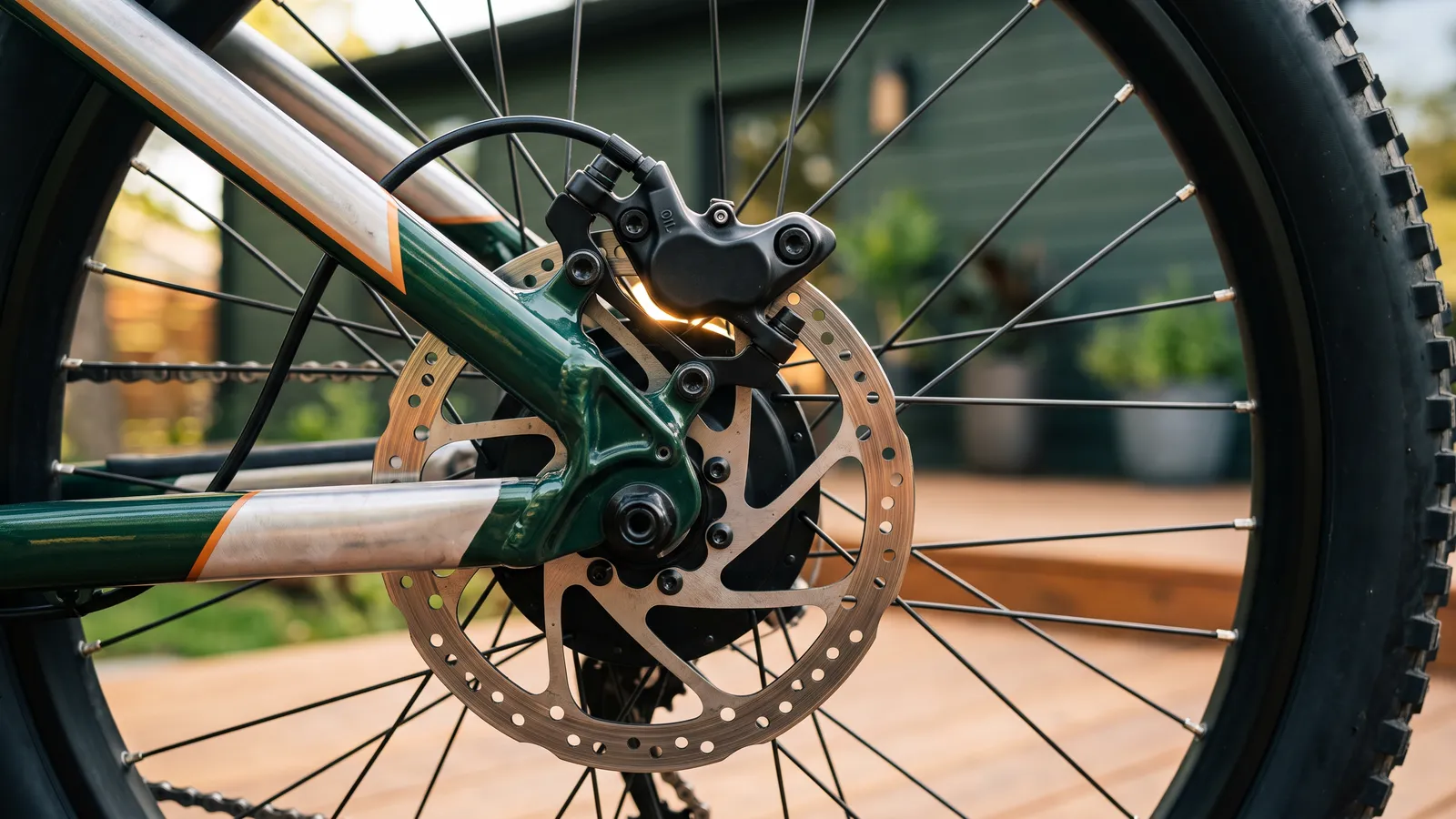 GuideHow long do e-bike brake pads last? Check wear safelyHow long do ebike brake pads last? Makers publish check intervals and wear limits, not a mileage. How to look at pads and rotors and when to see a shop.
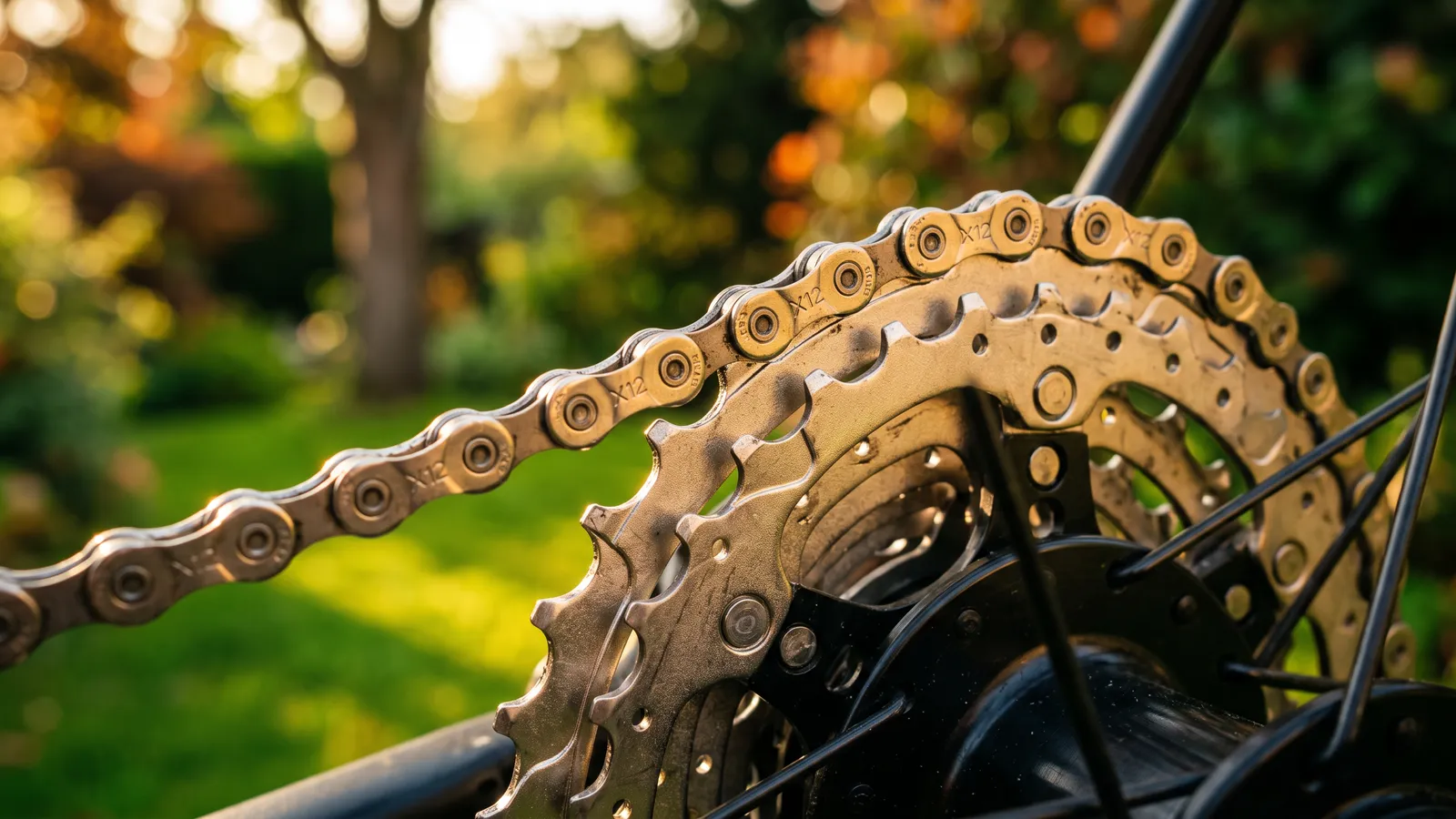 GuideHow to clean and lube an e-bike chain, step by stepHow to clean an e-bike chain and lube it: remove the battery first, degrease with a rag, lube each link, wipe off the excess, keep it off the brake rotors.
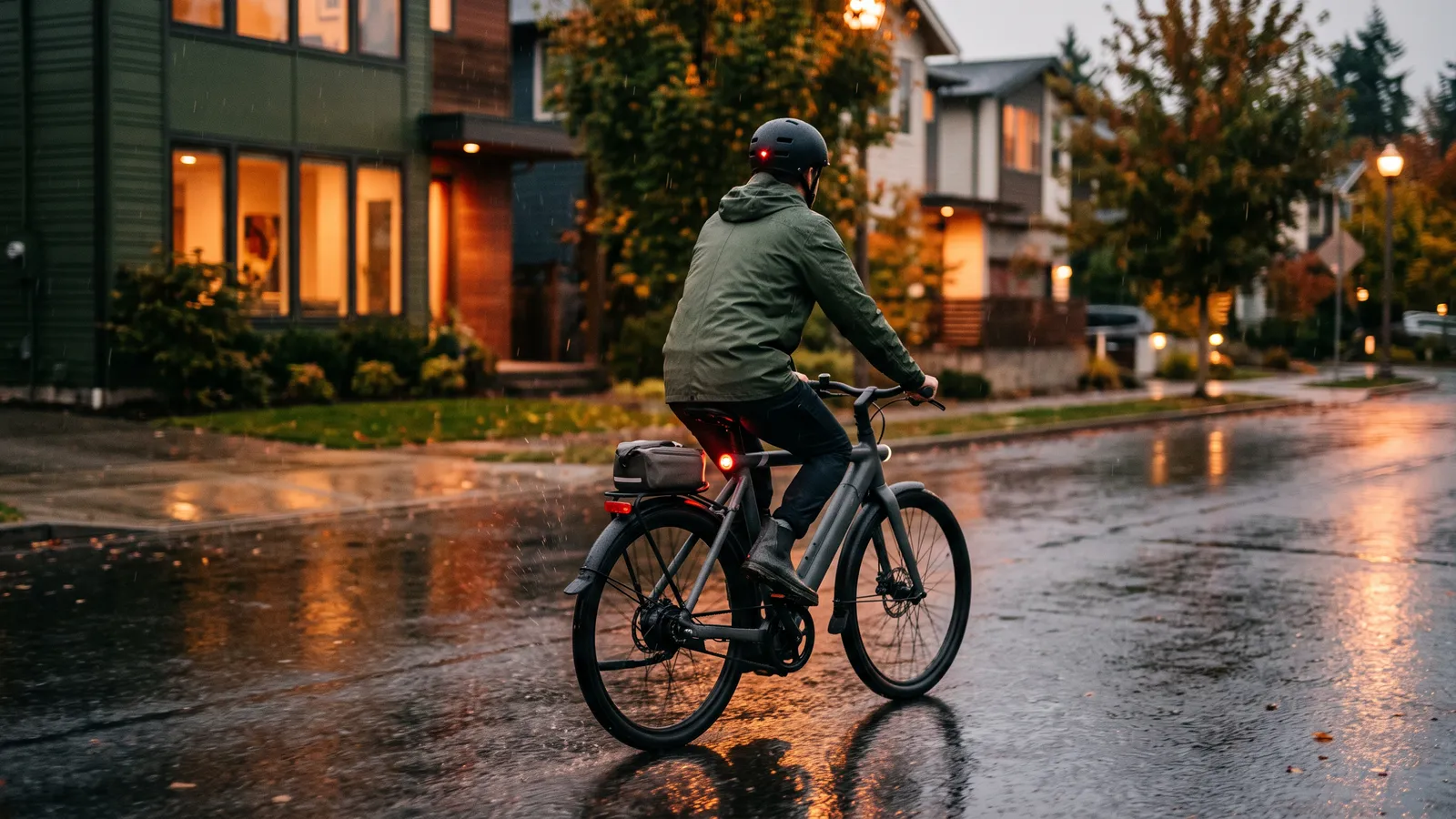 GuideCan you ride an e-bike in the rain? What makers sayCan you ride an ebike in the rain? Makers say light rain is fine; storms and submersion are not. IP ratings, after-ride steps, and why not to charge wet.