
How long do e-bike brake pads last? Check wear safely
Last checked Oct 24, 2026 · By EbikePost editors
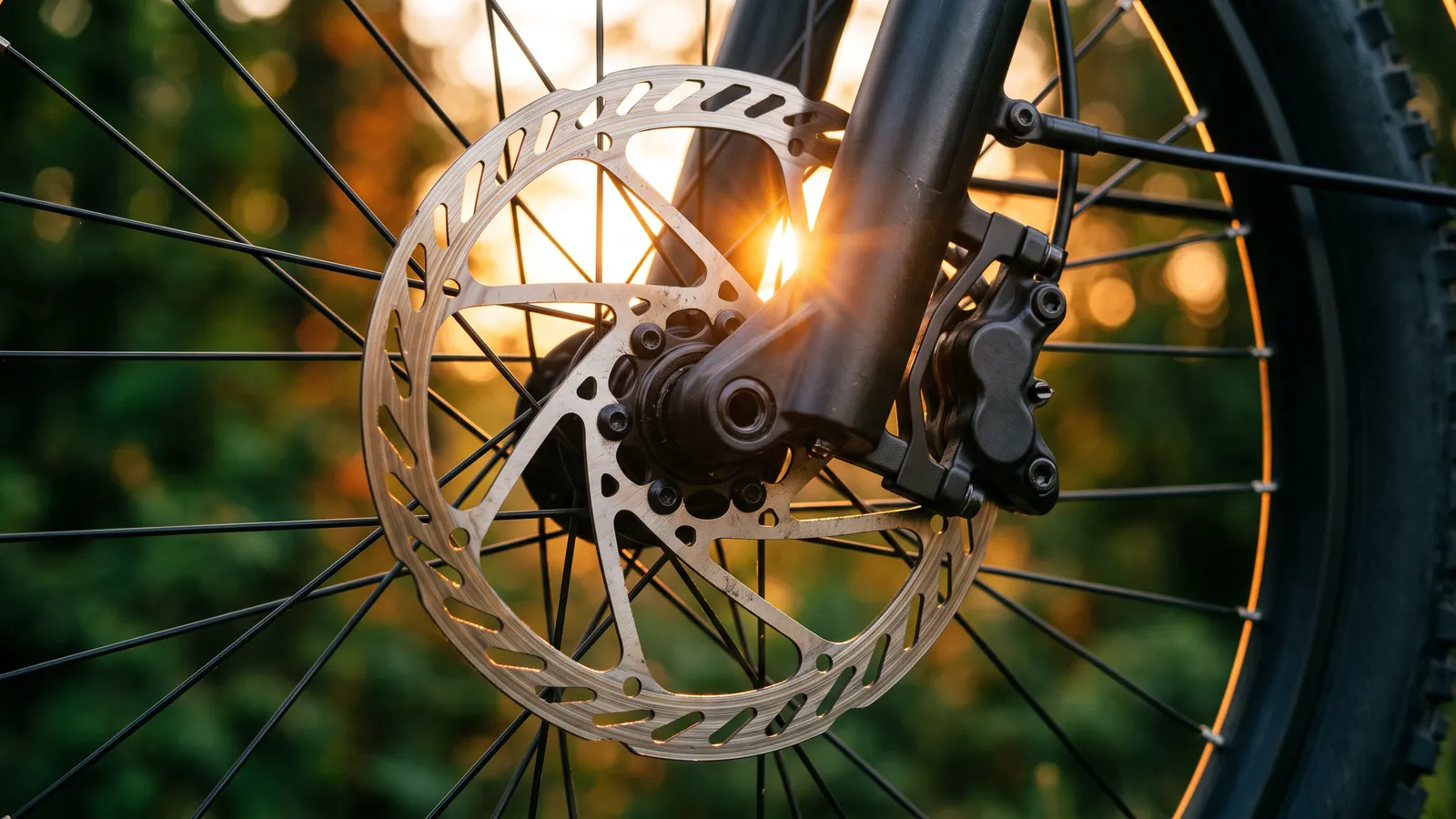
No e-bike maker we found publishes "pads last X miles", because wear depends on your weight, hills, weather and braking habits. What makers do publish is a check interval and a wear limit. Lectric's manual says to check the pads monthly (about every 250 to 500 miles) and gives a thickness limit for its brakes. Look at your pads and rotors on a schedule, compare them with the limit in your own brake maker's manual, and take the bike to a shop if you are unsure.
Why there is no single mileage
Brake pads are a wear item. Lectric, Aventon, Ride1Up and Rad all list pads (and, for Ride1Up and Lectric, rotors too) as wear items that are not covered by warranty because they wear down with normal use. None of those pages promises a lifespan. A heavier rider, a hilly commute and wet weather all load the brakes more, which is why a check on a schedule beats a guess from mileage.
How to check pad wear
You do not need tools for a first look. Your manual comes first, because calipers differ.
- Park on level ground and look into the caliper. With the wheel on, shine a phone light between the pad and the rotor. You should see a visible layer of pad material on the metal backing plate.
- Check both wheels. Front and rear pads wear at different rates.
- Compare with your maker's limit. Lectric's manual says new pads are 4 mm and shows 2.7 mm as the worn-to-minimum thickness. It adds that when wear exceeds 0.8 mm, replacement is recommended, and when total thickness falls below 2.7 mm, pads must be replaced. Those numbers are for Lectric's brakes. Other brake makers state their own limits, so read the one in your brake maker's manual instead of using a rule of thumb from a blog.
- Check how the lever feels. Lectric's manual notes that new brakes need bedding in: braking is weaker for the first 10 to 30 pulls. Beyond that, a lever that has become soft or pulls much closer to the bar than it used to needs a shop.
- Listen. Squealing, grinding or a pulsing feel when you brake is a reason to have the pads and rotor looked at.
Lectric's manual puts "check your brake pads for signs of wear" on its monthly service list, which it ties to about every 250 to 500 miles. A monthly look in the same minute you check tire pressure is easy to remember. Our e-bike pump guide covers the pressure side.
Pad and rotor wear at a glance
| What to look at | What to do | Who does it |
|---|---|---|
| Pad material thin or near your maker's limit | Replace the pads | You only if your manual documents it, otherwise a shop |
| Pads that look oily or glazed, or braking that suddenly feels weak | Stop riding and get it checked | Shop |
| Scored, bent or wobbling rotor | Have it inspected and likely replaced | Shop |
| Rotor thinner than its stamped limit | Replace the rotor | Shop |
| Soft or spongy lever | Do not ride hard; have the brake checked | Shop |
| Squeal or rubbing that does not clear | Inspect pads and rotor | Shop |
Rotors
Rotors wear more slowly than pads, but they do wear. Unior, a bike tool maker, says the minimum thickness is usually stamped on the rotor and that the stamped limit overrides any chart. It says to measure the braking band (not the outer edge) at three or four points and compare the thinnest reading with the limit. If you do not own a caliper or rotor gauge, a shop can measure it for you. Lectric's and Ride1Up's pages both list rotors as wear items.
Wet weather
Lectric's manual warns that it takes longer to brake and stop in the wet. Rad's guide says to brake earlier, and that is general road advice for any bike. Pads that look fine can still feel weaker in the rain. If you ride in rain a lot, check pads more often. See our rain guide and consider lights for wet, dim rides.
Brake work beyond a visual check: see a shop, or follow your brake maker's manual exactly. Do not bleed brakes, adjust hoses or cables, or work on the caliper unless your manual documents it as an owner task. Lectric's manual warns never to add or mix DOT brake fluid or mineral oil that is not intended for bicycle hydraulic disc brakes. Rad's Basic Tune page says there is no extra labor charge for brake pad replacement, though the cost of pads is not included. Prices differ by shop. If you are unsure, a shop is the safer choice, because brakes are what stops a heavy bike.
Is it time for a new bike?
Worn pads are a small repair. If the frame, motor or battery are also near the end of their useful life, compare the cost against a new bike. Our best commuter e-bikes and best e-bikes under $1,500 are starting points.
FAQ
How long do ebike brake pads last? Makers do not publish a mileage. Check pads on the interval in your manual (Lectric: monthly, about every 250 to 500 miles) and replace them when they reach your brake maker's limit.
How often to replace ebike brake pads? When they reach the wear limit, not on a calendar. Pads on a heavily used or wet-weather bike reach it sooner.
How long do ebike rotors last? Longer than pads, but they do wear. Compare the thickness with the limit stamped on the rotor, and replace a rotor that is scored, bent or below the limit.
Can I replace ebike brake pads and rotors myself? Only if your bike maker's manual documents the steps as an owner task. Otherwise use a shop. Warranty terms from Lectric, Aventon and Ride1Up treat pads as wear items that you maintain at your own cost.
Written from makers' manuals, warranty pages and tool-maker guides, not from repairs. We could not open Shimano's current dealer manual to quote its pad and rotor limits, so check the limit for your own brakes in your brake maker's manual.
Sources (8)
- Lectric XP4 User Manual v1.3 (brake pad thickness, monthly checks, wear items, wet-weather braking)
- Lectric eBikes Help Center: Warranty (pads and tires listed as wear items)
- Aventon Limited Warranty Terms (brake pads and chains excluded as wear items)
- Ride1Up warranty info (brake pads and rotors listed as wear items)
- Rad Power Bikes: Warranty (wear items include brake pads, chains and hydraulic brake fluid)
- Rad Power Bikes RadRetail service page: Basic Tune contents (pad replacement labor, pads billed separately)
- Rad Power Bikes: How to Ride an Ebike in the Rain (brake earlier in the wet)
- Unior Tools: When to replace disc brake rotors (stamped limits, measuring the braking band)
Last checked Oct 24, 2026
Keep reading
 GuideE-bike battery not charging: safe checks to try firstWhy is my ebike battery not charging? Safe checks: power switch, outlet, charger light, plug, temperature and display codes. Then contact the maker.
 GuideHow far can an e-bike go? Ebike range explainedEbike range explained: how battery Wh, assist level, rider and cargo weight, terrain, speed and cold change range, and how to estimate yours.
 GuideWhat Rad Power Bikes owners can do now: warranty and serviceRad Power Bikes warranty after Chapter 11: what Rad's own pages say, where to get service and parts, independent shops, and choosing a replacement bike.