
Charge an e-bike battery to 80 percent: what makers say
Last checked Oct 24, 2026 · By EbikePost editors
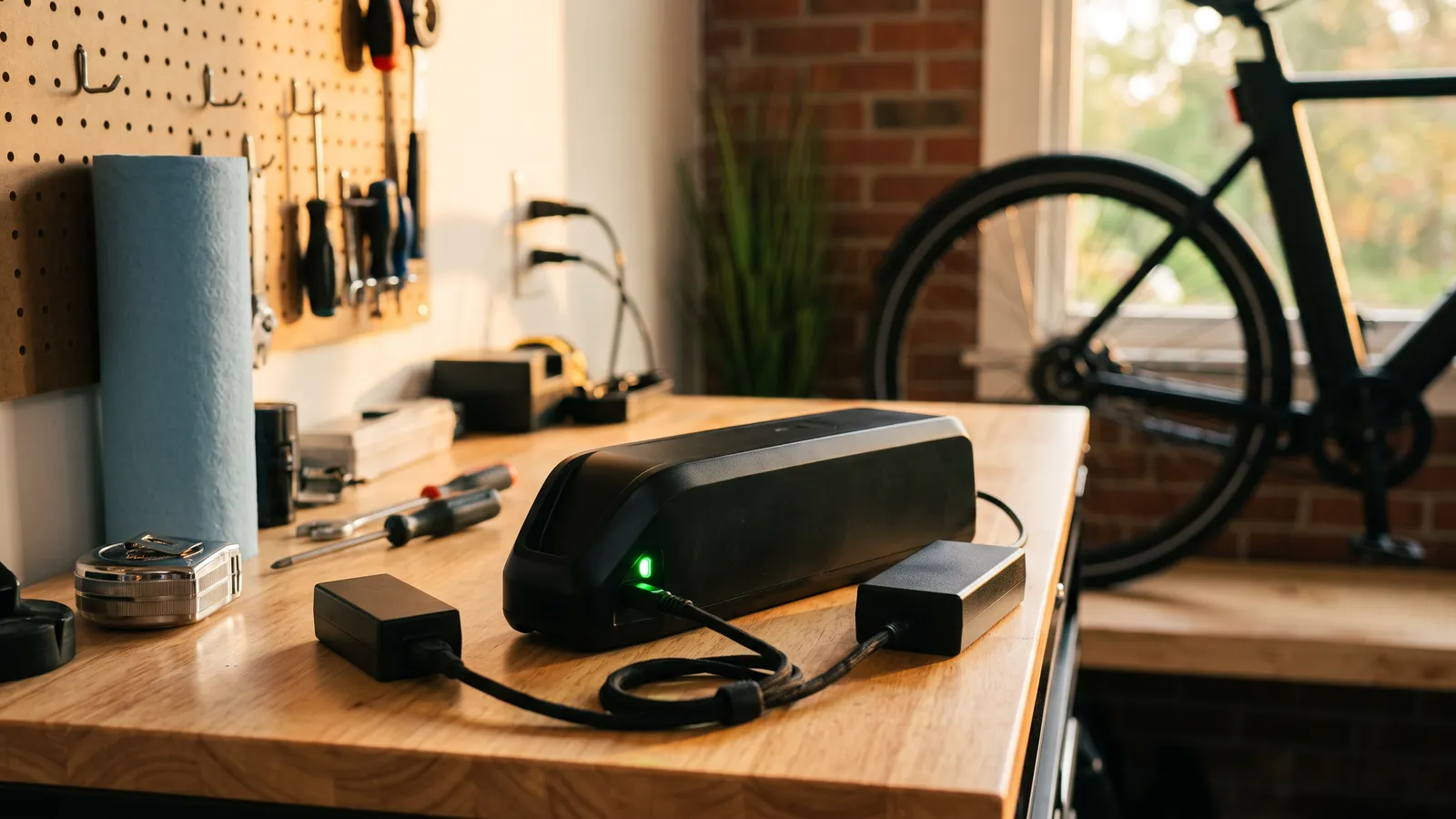
Makers do not agree on this, so your own manual wins. Tern's guide to Bosch batteries says you can get the longest life by keeping the charge at 80 to 90 percent and recharging when it drops to roughly 30 to 40 percent, with a full charge for demanding rides. Lectric's manual says the opposite for its pack: charge to 100 percent a few hours before you ride. All of them agree on storage (not full, not empty), on not leaving a battery on the charger overnight, and on staying nearby while it charges. Neither source gives a number for how much longer a battery lasts.
What each source says
| Source | Everyday charging | Storage |
|---|---|---|
| Tern (Bosch battery guide) | 80 to 90 percent for the longest lifespan; wait until about 30 to 40 percent before recharging; full charge only for a demanding ride | Charge to about 30 to 60 percent; occasional riders can keep it around 40 to 70 percent |
| Lectric (XP4 manual) | For optimum service life, charge to 100 percent a few hours before you plan to ride; if you will not ride for days, wait until the day before | About 60 percent; recheck every 2 to 3 months |
| Rad Power Bikes (blog) | Not specified on the page | 50 to 75 percent; long storage empty or full can cause serious damage |
Tern's page also says a full 100 percent charge is recommended only before the first ride. The difference between the sources is a good reason to read your own manual and app before changing a habit. Tern is a bike maker relaying Bosch's guidance, and it is not the manual for every Bosch-equipped bike.
Is 80 percent worth it?
Warranty terms show why makers care about the number of full charges. Bosch's warranty runs to 500 full charge cycles and Aventon's and Rad's to 300, each alongside a time limit. See how long e-bike batteries last. But the makers we checked do not publish an amount of extra life from stopping at 80 percent. If you often need the whole battery, charging to 100 percent just before the ride is a normal habit under some manuals, and it avoids a dead battery halfway home. Our range guide explains what else changes how far one charge goes.
How to do it safely
There is no safe hack for this. These are the habits that need nothing but the charger and the display.
- Check your manual and app first. If your bike or its app has a charge-limit setting, use that, as the manual describes. If it does not, there is nothing to change.
- Use the maker's own charger. Lectric's manual warns that a non-approved charger can cause death or serious injury. CPSC's advice is to use the charger supplied with or recommended by the maker.
- Charge indoors, in a dry place, away from anything that burns. Lectric's manual says not to charge on an easily ignited surface.
- Stay nearby and read the display. Lectric's manual refers to the energy bar on the display for charge level. Bars are not exact percentages, so treat any target as approximate.
- If you choose to stop early, be there to unplug it. CPSC's guidance is to be present when charging. Never leave a battery charging while you are out or asleep so you can stop it at a particular level.
- Unplug when the charger light says it is done. Lectric's manual says the light is green when charging is complete, then to disconnect the cable from the battery and the power cord from the wall.
- Charge at room temperature, not straight after a cold ride. Our battery-not-charging guide covers the temperature checks.
For a long winter break, follow your manual's storage level instead of 80 percent: about 60 percent for Lectric, 30 to 60 percent in Tern's Bosch guide, 50 to 75 percent for Rad. Take the battery off the bike if your manual says so.
What not to do
- Do not buy or fit "charge-control" add-ons, change the charger, or alter battery settings. Makers specify the charger and battery as a system. Our UL 2849 guide explains why certification applies to the system as sold. Lectric's manual says opening the battery voids all warranty claims.
- Do not leave it connected overnight. Lectric says not to leave the battery connected to the charger overnight and that leaving it permanently connected is not recommended.
- Do not charge a damaged, hot or swollen battery.
Rad Power Bikes batteries
On 24 November 2025 the CPSC told owners to stop using Rad batteries with model numbers RP-1304, RAD-S1304Y and HL-RP-S1304. Check your battery label and read what Rad owners can do now.
When to see a shop or contact the maker: the battery gets hot while charging, swells, leaks, smells unusual, will not take a charge, or range has dropped sharply. Stop using it and do not open it. Lectric's manual says to evacuate the area and notify the fire department if you notice such signs while charging. For a charge-limit setting you cannot find, ask the maker or a dealer for your model.
FAQ
How to charge an ebike battery to 80 percent? Only by a method your maker provides, such as a setting in the app. Otherwise, your options are the manual's normal charging steps and staying present. We do not recommend add-on devices.
Should I charge my ebike to 100? Lectric's manual says to charge to 100 percent a few hours before riding. Tern's Bosch guide says 80 to 90 percent for longest life unless you need full range. Follow your own manual.
Can you overcharge an ebike battery? The manuals we read do not say that reaching a full charge damages the pack. They do say not to leave it on the charger overnight or unattended, and to use only the right charger.
Do ebike battery charge cycles matter? They are how warranties are written. Bosch counts 500 full charge cycles, Aventon and Rad 300, each with a time limit.
What are good ebike battery charging tips? Use the maker's charger, charge indoors and dry, stay nearby, charge at room temperature, and store at the level your manual gives.
Written from makers' manuals, support pages and CPSC material, not from battery testing. Your own manual decides.
Sources (7)
- Tern Bicycles: How to Care for Your Bosch E-Bike Battery (80-90% for longest life, 30-40% recharge point, storage)
- Lectric XP4 User Manual v1.3 (charge to 100% a few hours before riding, storage at about 60%, no unattended charging)
- Rad Power Bikes: How to Ride an Ebike in the Rain (storage at 50-75 percent)
- Bosch eBike Systems: Limited Warranty, July 2024 (full charge cycles)
- Aventon: Limited Warranty Terms (charging cycles, 75% capacity wording)
- CPSC Micromobility Information Center (be present when charging, use the supplied charger)
- CPSC warning on Rad Power Bikes batteries, 24 November 2025
Last checked Oct 24, 2026
Keep reading
 GuideE-bike battery not charging: safe checks to try firstWhy is my ebike battery not charging? Safe checks: power switch, outlet, charger light, plug, temperature and display codes. Then contact the maker.
 GuideUL 2849: what e-bike battery certification meansWhat UL 2849 e-bike certification covers, what it doesn't, how to check whether a bike has it, and where the official battery safety advice is.
 GuideHow far can an e-bike go? Ebike range explainedEbike range explained: how battery Wh, assist level, rider and cargo weight, terrain, speed and cold change range, and how to estimate yours.