
Hub vs mid-drive e-bike motors: which is better for you?
Last checked Oct 23, 2026 · By EbikePost editors
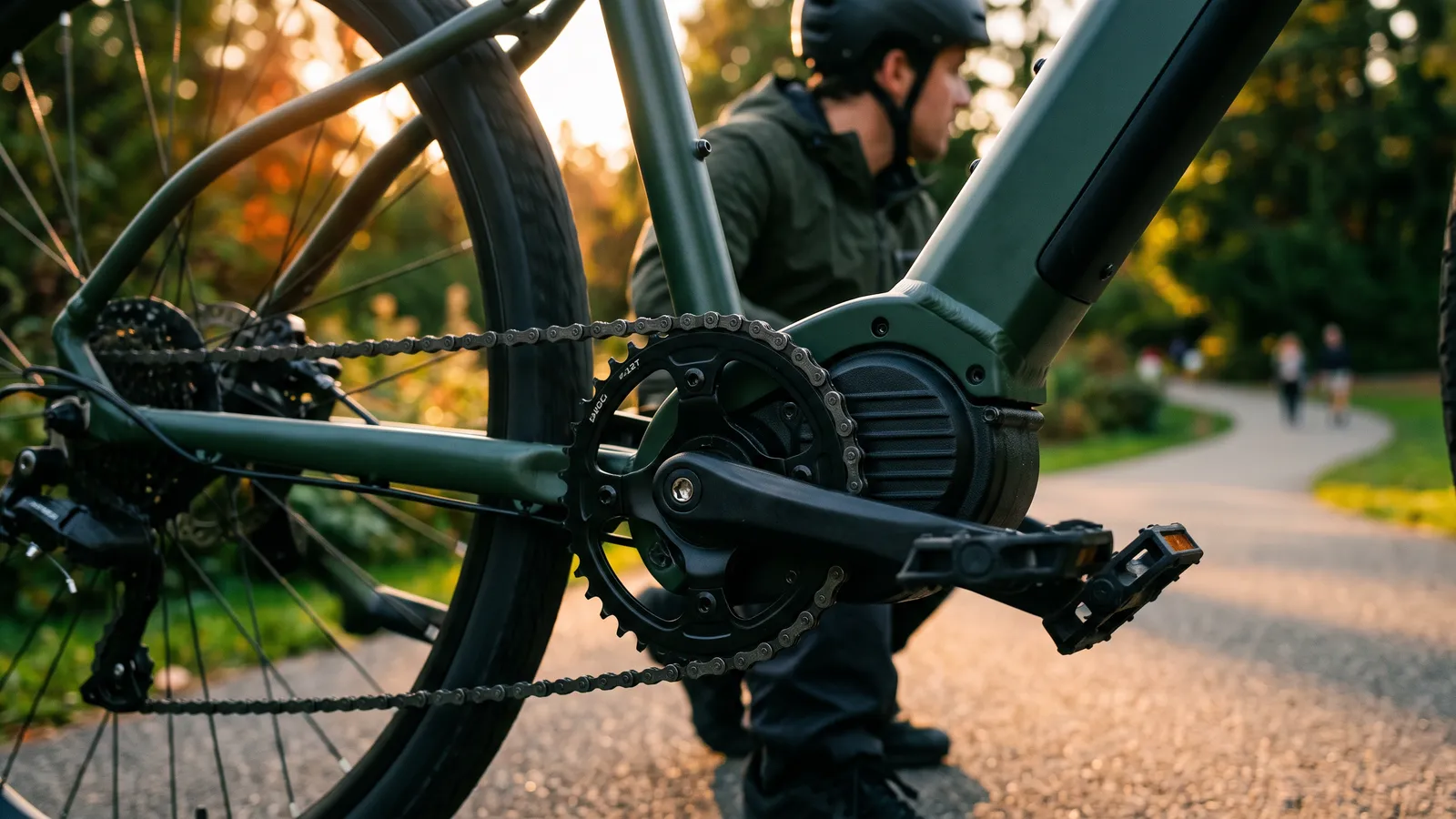
A hub motor sits in the centre of a wheel, usually the rear, and turns that wheel directly. A mid-drive motor sits at the cranks, where the pedals attach, and drives the chain, so it works through the bike's gears. Hub motors are common on lower-priced bikes. Mid-drives are common on bikes from component makers such as Bosch. Which is better depends on your hills, budget and how much you want to service.
How each motor works
Hub motor. The motor is built into the hub of a wheel. Bosch describes its Hub Line unit as sitting "in the hub of the rear wheel." Many popular direct-to-consumer bikes use a rear hub motor. On the maker pages we use for our bike data, the Lectric XP4 and the Aventon Abound SR both list a rear hub motor.
Mid-drive motor. The motor sits at the bottom bracket, where the cranks attach. Bosch's Performance Line CX is labelled a "mid-drive motor." Tern's HSD P5i uses a Bosch Performance Line motor integrated in the bottom bracket.
Because a mid-drive pushes through the chain, the bike's gears change how the motor's pull reaches the wheel. A hub motor pushes the wheel directly, so gear choice changes how much you pedal but not how the motor drives the wheel. That is the editors' summary of how the two layouts work.
Reading the numbers
Makers publish torque in newton-metres (Nm) and power in watts (W), but the two types are measured differently, so compare carefully.
- Bosch lists the Performance Line CX at up to 120 Nm, and its Hub Line at 45 Nm, with a note on its page about variation.
- Our bike data lists maker figures such as 75 Nm for the Tern HSD P5i (mid-drive) and 80 Nm for the Aventon Abound SR (rear hub). These come from different makers' own pages and test methods.
- Torque numbers describe the motor, not the whole bike. Weight, tires and gearing also matter on a hill.
"Peak" and "nominal" watts are different. Look for the maker's nominal figure, and whether the peak figure comes with a footnote. U.S. state laws usually look at a motor under 750 W: see e-bike classes explained.
What each is good at
| Hub motor | Mid-drive motor | |
|---|---|---|
| Price | Often found on lower-priced bikes | Often found on higher-priced bikes |
| Hills | Depends on the motor's torque and your gear choice | Can use the bike's gears to help on hills |
| Drivetrain wear | The motor doesn't load the chain | The motor loads the chain and cassette |
| Flat tire | The motor is in the wheel, which can make wheel changes more involved | Wheel removal is like a normal bike's |
| Weight | Weight sits at one wheel | Weight sits low and central |
| Servicing | Common parts by maker | Often through authorised dealers for the system |
Treat the table as general tendencies, not rules. The maker's spec page for the bike decides.
Which suits you
- Mostly flat, short trips, tight budget: a hub-motor bike is a common fit.
- Hilly route or loaded riding: look at motor torque, gearing, and whether the maker shows the figure. Bosch markets its mid-drive Performance Line CX for performance riding, and some hub bikes list high torque as well.
- Want the same parts and service network as other bikes: a mid-drive from a known system can be easier to service at a shop, but check which shops in your area service that brand.
- Want fewer moving parts to service: read the manual for what the maker says must be serviced.
- Cargo or heavier riders: compare the maker's stated payload and rider limits as well as the motor type.
Questions to ask before buying
- What is the motor's nominal power, and its stated torque?
- What is the top assisted speed and class?
- Who services the motor, and what does the warranty say about it? Tern's warranty page, for example, doesn't cover the Bosch motor and battery as Tern's own parts.
- Is the battery certified? See UL 2849.
For how the bike senses your pedaling, see torque sensor vs cadence sensor.
If a motor makes a new noise, loses power or shows an error code, don't open the motor or wiring. Contact the maker or a qualified e-bike shop. See e-bike error codes.
Spec-based, not ridden: figures are the makers' own, and we haven't ridden these bikes.
Sources (6)
- Bosch eBike Systems: Performance Line CX (mid-drive motor, torque sensor, cadence sensor, specs)
- Bosch eBike Systems: Hub Line (drive unit in the rear wheel hub)
- Tern HSD P5i product page (Bosch Performance Line motor integrated in the bottom bracket)
- Tern warranty overview (Bosch motor and battery are third-party parts)
- Aventon Abound SR product page and specifications (rear hub motor)
- Lectric XP4 product page and specifications (rear hub motor)
Last checked Oct 23, 2026
Keep reading
 GuideTorque sensor vs cadence sensor e-bikes: which to chooseTorque sensor or cadence sensor? How each detects your pedaling, what that changes on hills and in traffic, and how to find it on a maker's spec page.
 GuideHow far can an e-bike go? Ebike range explainedEbike range explained: how battery Wh, assist level, rider and cargo weight, terrain, speed and cold change range, and how to estimate yours.
 GuideWhat size e-bike do I need? Ebike size guide by heightEbike size guide: how to use the maker's rider height range, frame style, standover and saddle height to pick an e-bike that fits before you buy.